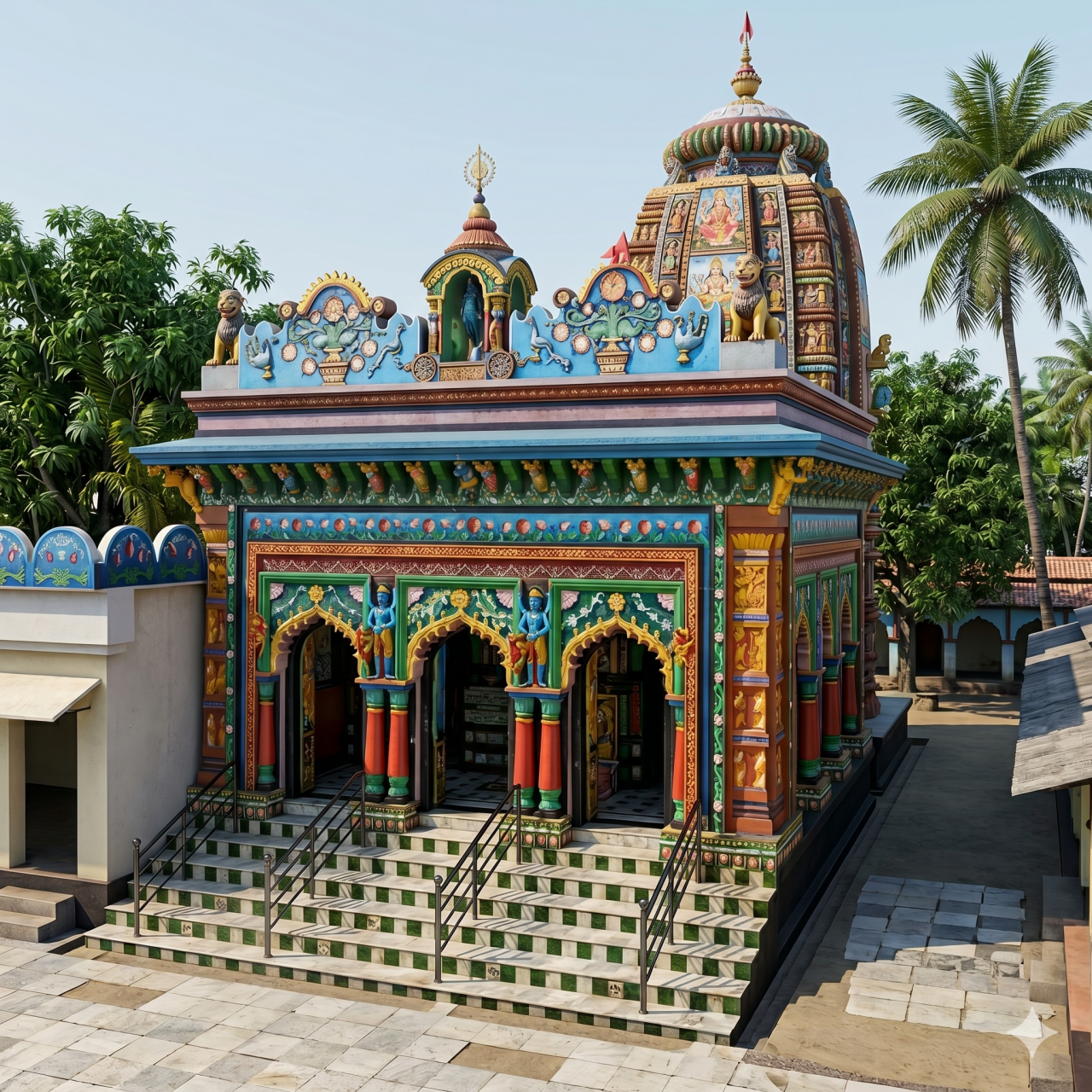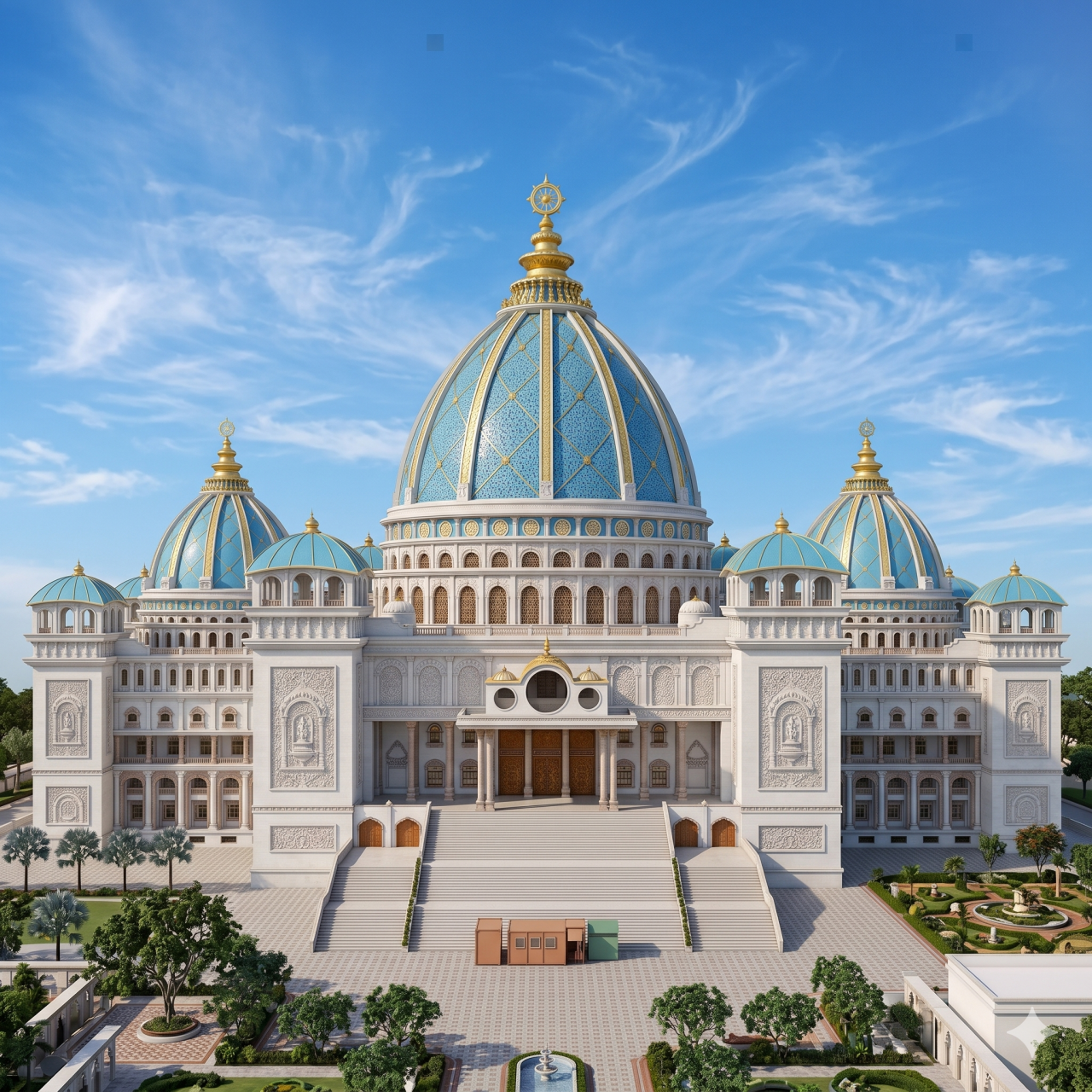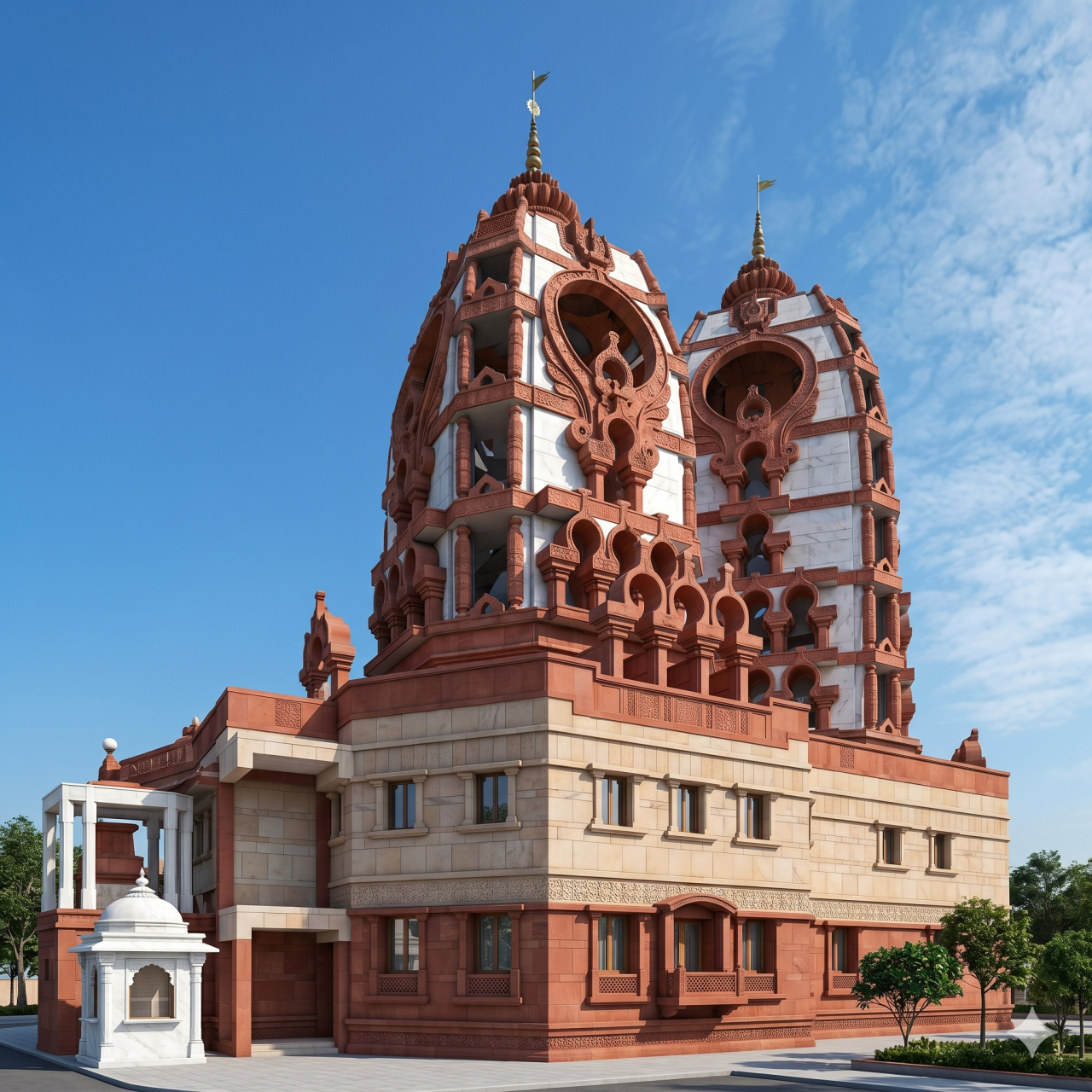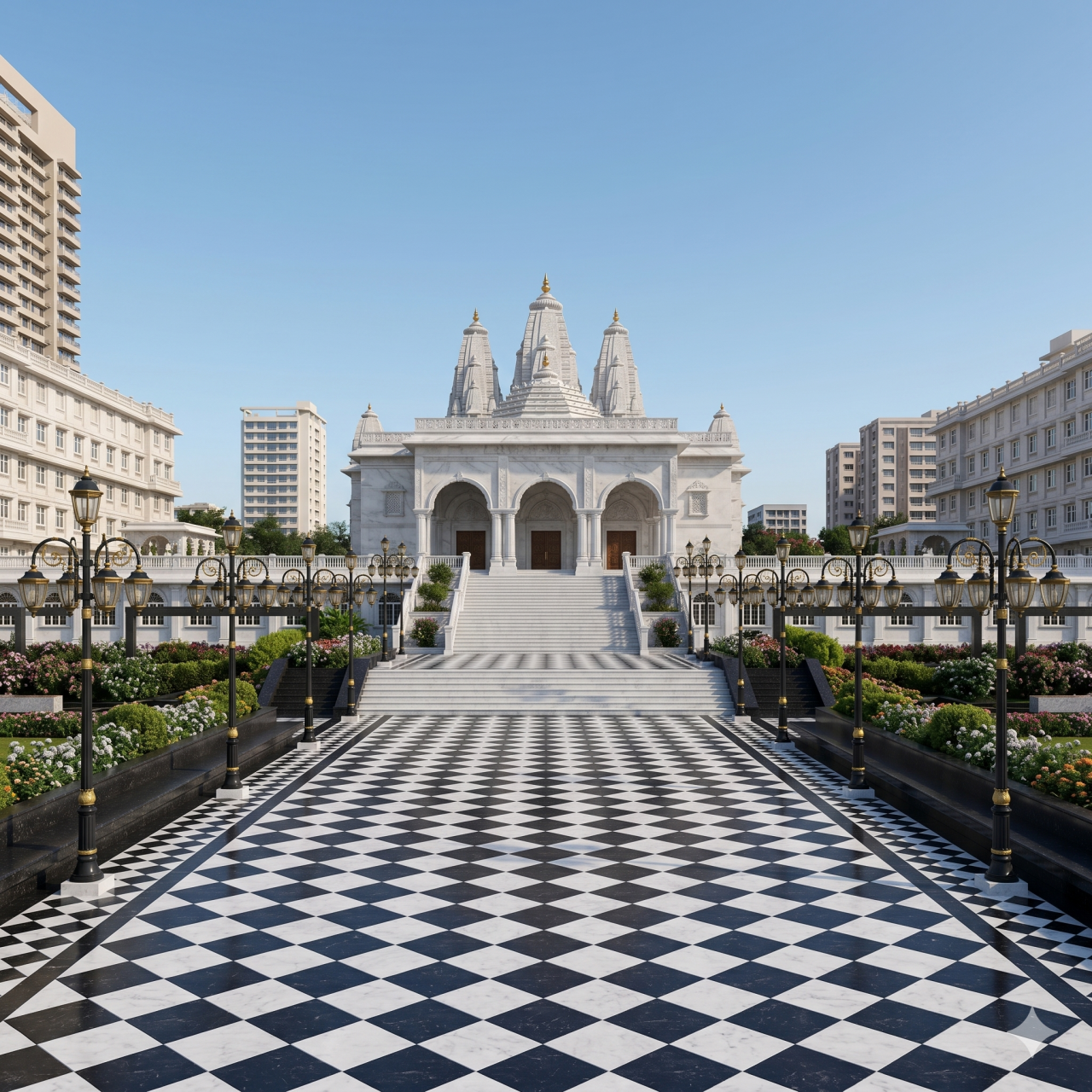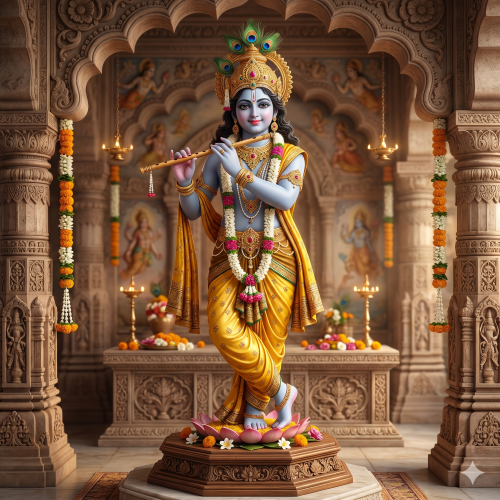
Krishna was born in Mathura to Vasudeva and Devaki, in a period when the tyrant king Kansa ruled Mathura. Kansa, fearing a prophecy that Devaki’s eighth child would kill him, imprisoned the parents and sought to kill Krishna. To protect him, Krishna was secretly taken across the Yamuna River to Gokul, where he was raised by foster parents Nanda and Yashoda.
Krishna’s childhood is comemorated for his playful and miraculous deeds, including stealing butter, performing pranks, and displaying divine powers. Stories of him subduing demons, like Putana and Kaliya, demonstrate his role as a protector of good over evil. The tales of his youthful mischieves with the gopis (milkmaids) of Vrindavan, especially his bond with Radha, symbolize divine love and devotion.
Krishna later became the ruler of Dwarka, a city he established after leaving Mathura. He is depicted as a wise and just king, mediator, and strategist, emphasizing dharma in governance. His diplomatic skills, moral guidance, and support to the Pandavas highlight his role as divine guide and a practical leader in human affairs.
Krishna embodies multiple aspects of life: the playful child, the romantic lover, the wise philosopher, and the heroic protector. His flute symbolizes divine music, attracting souls toward devotion. Festivals like Janmashtami, celebrating his birth, and Holi, commemorating his playful pranks, reflect his enduring presence in cultural and spiritual life.
Lord Krishna represents the harmonious blend of divinity and humanity. His life illustrates that righteousness, love, and devotion are paramount, regardless of life’s challenges. Revered as a guide, friend, lover, and teacher, Krishna’s influence transcends time, making him one of the most worshipped divinity all across the world. Through his stories and teachings, Krishna continues to inspire devotion, moral living, and the pursuit of spiritual wisdom.
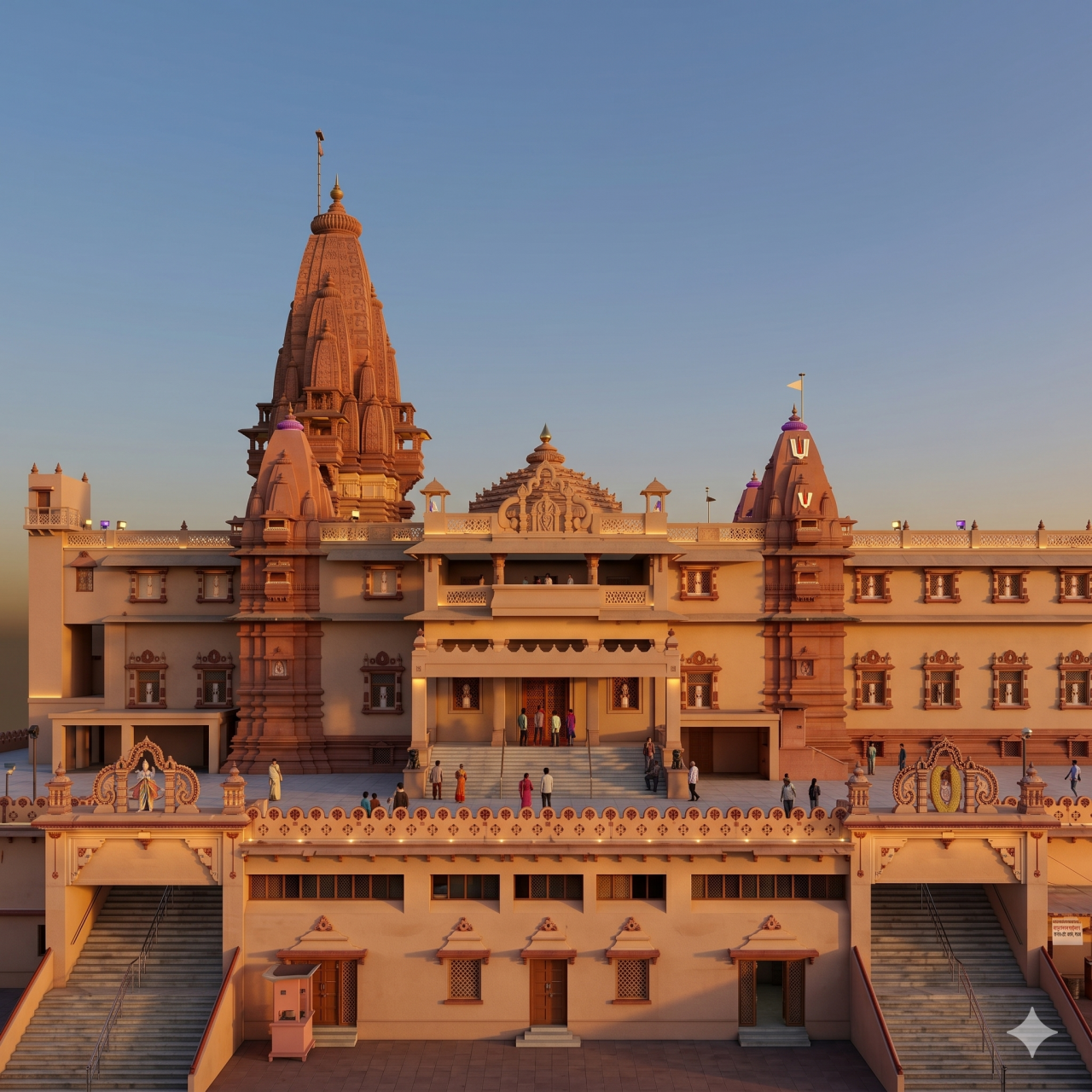
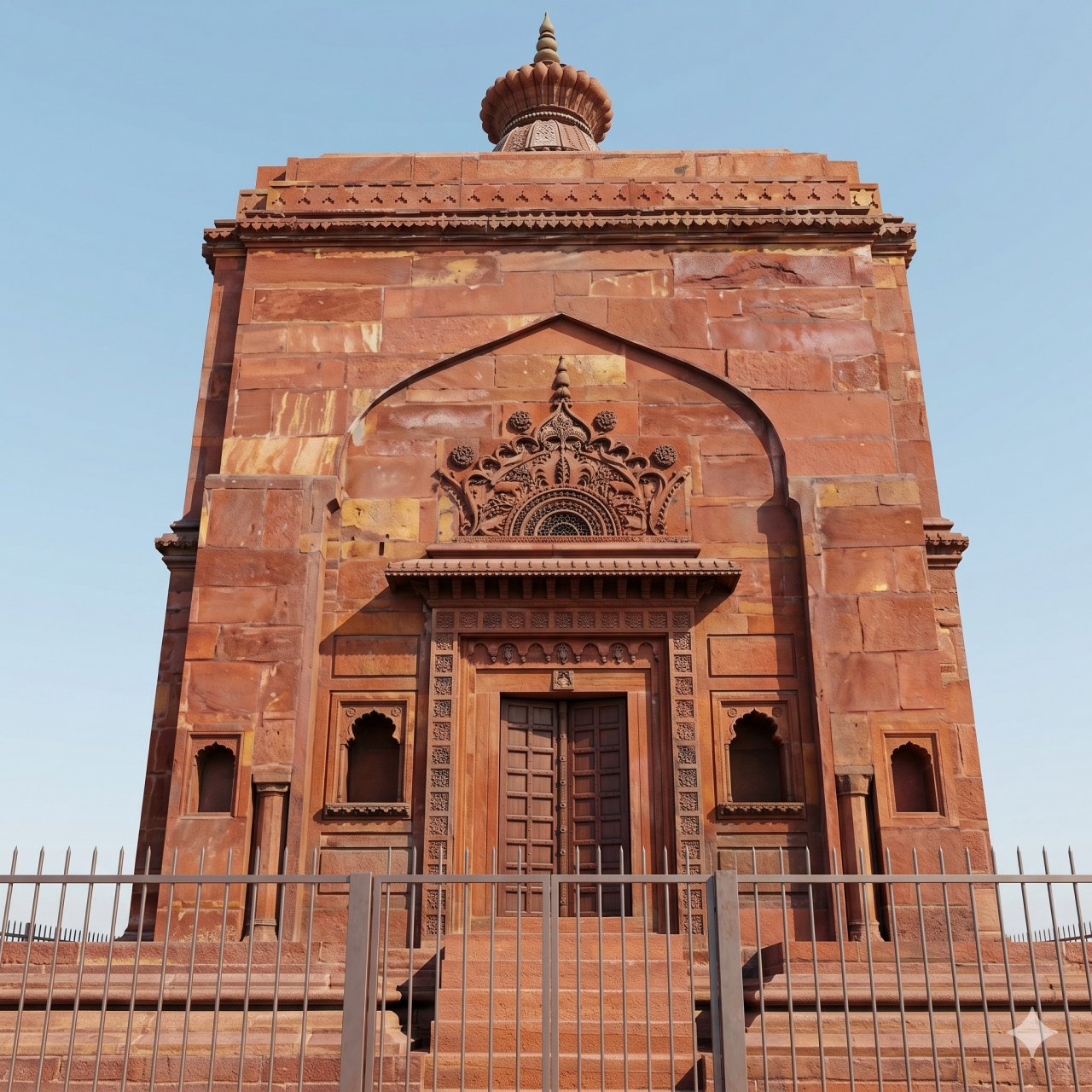
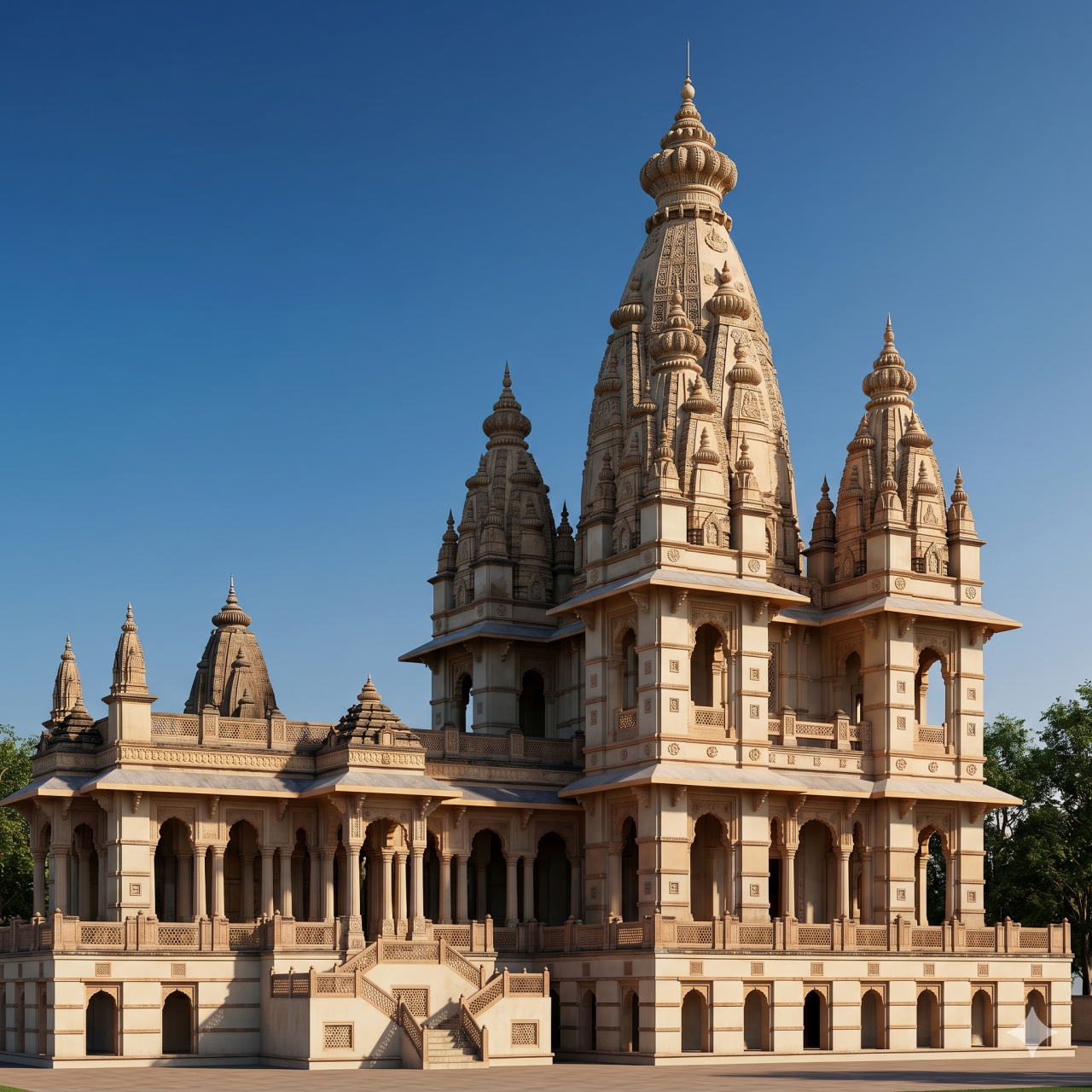
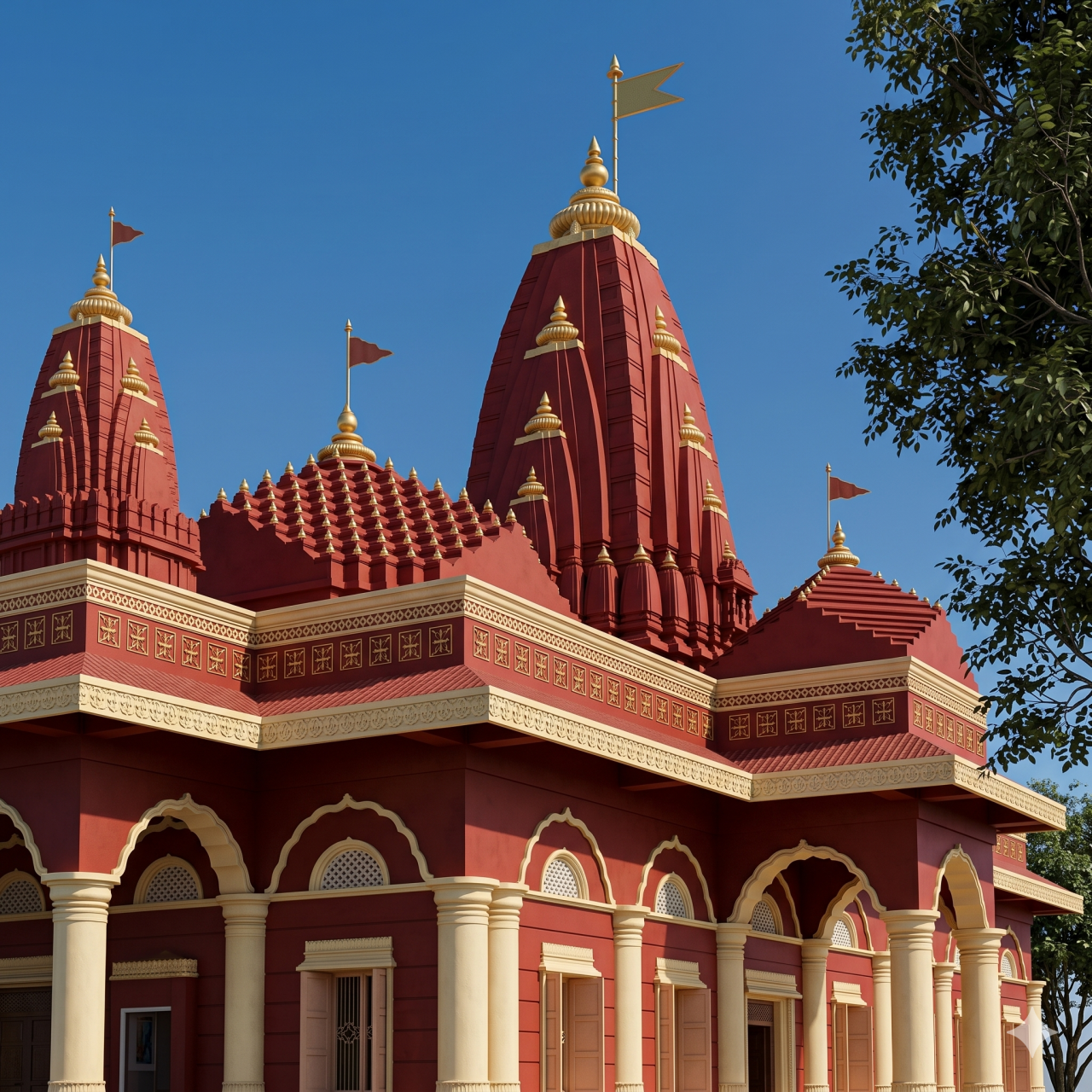
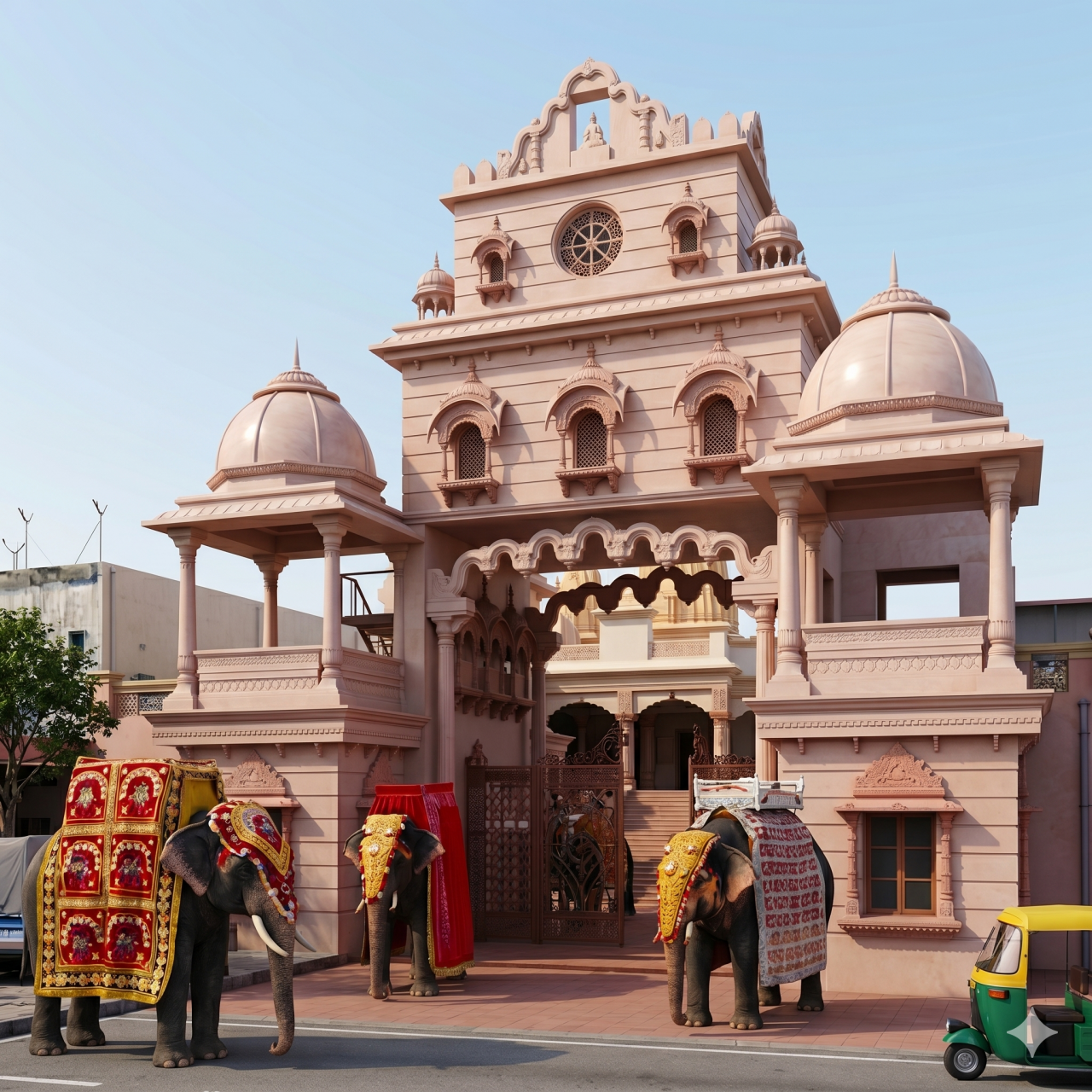
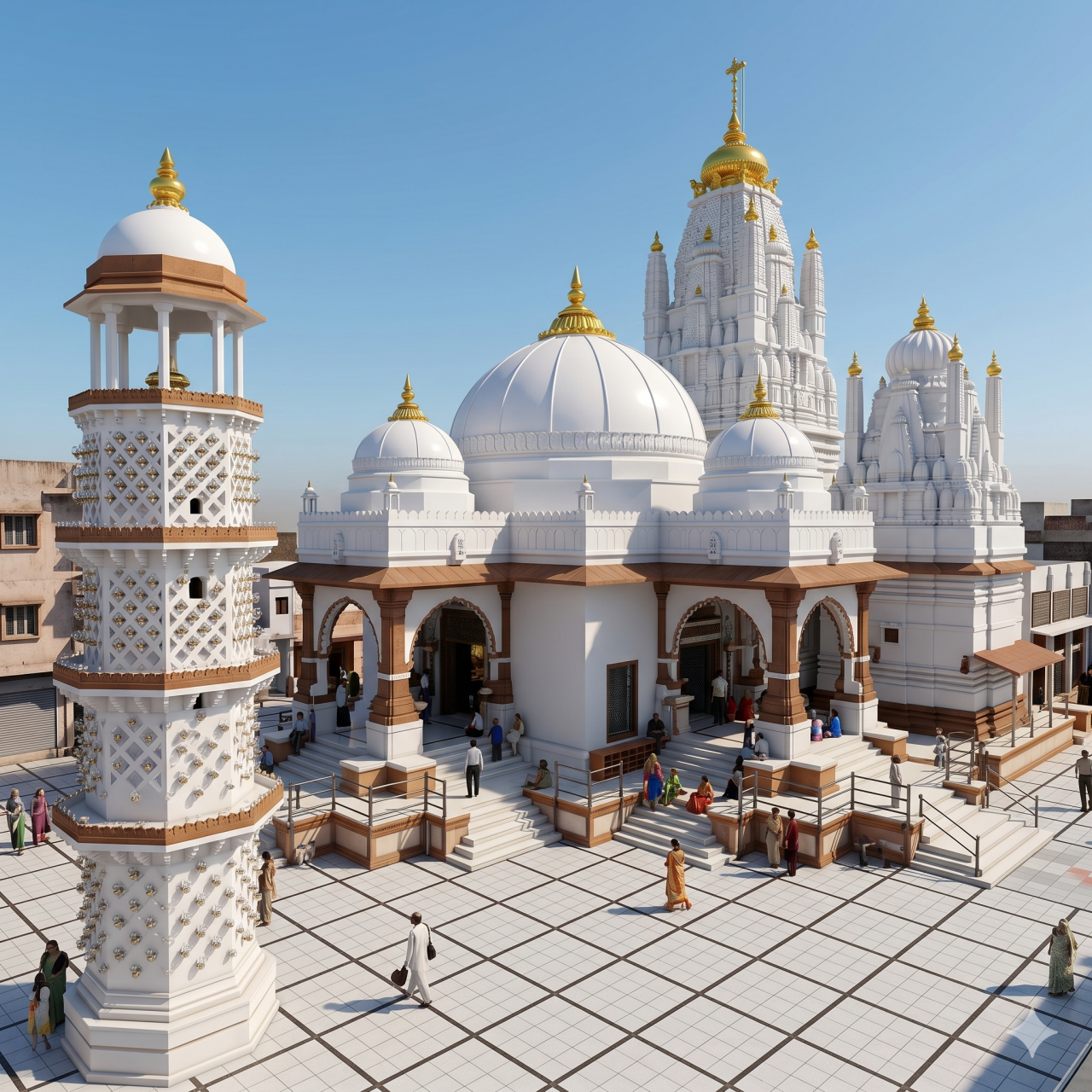
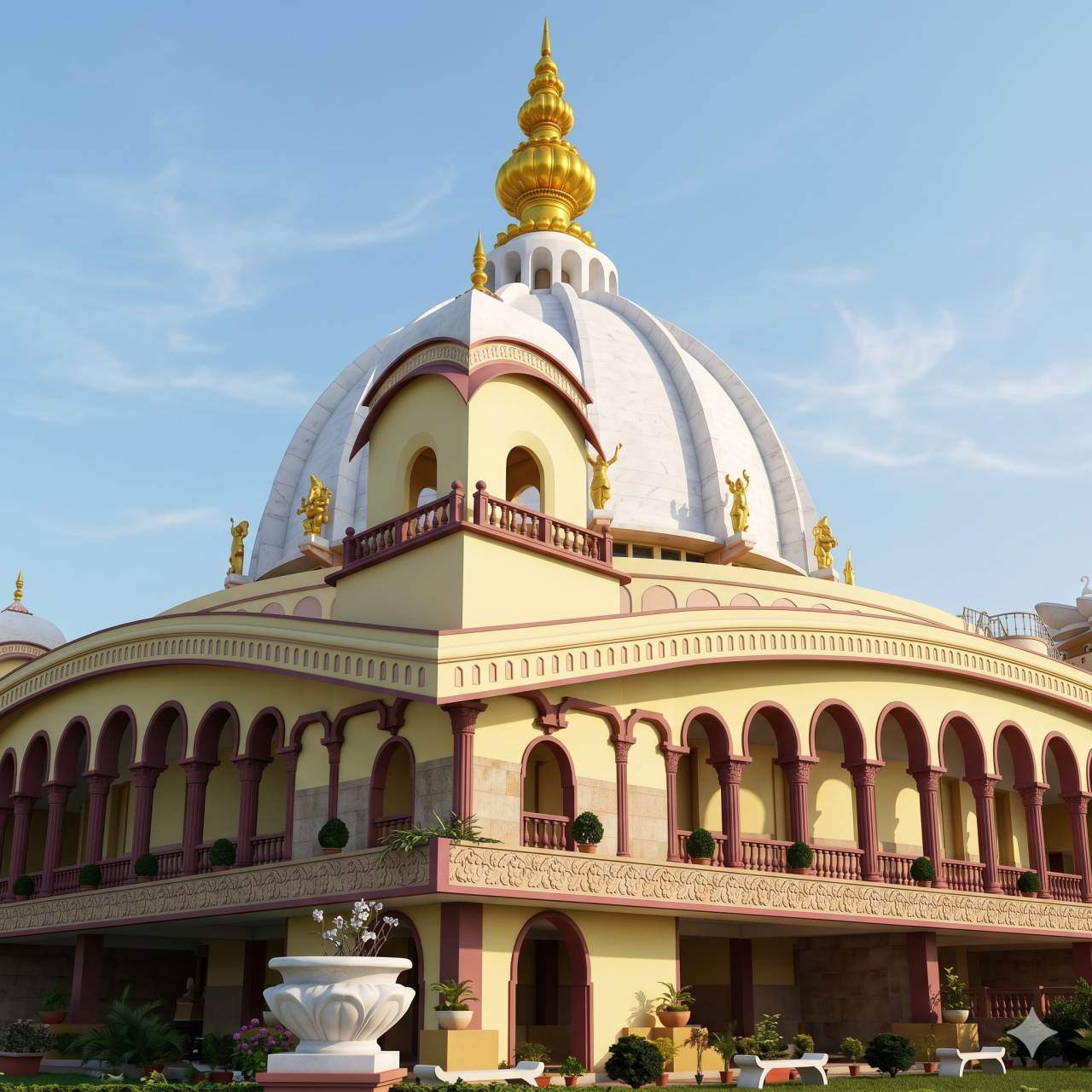
Shri Krishna Janmabhoomi Temple is one of the most sacred Hindu temples, believed to be the birthplace of Lord Krishna. It is a major pilgrimage site, attracting millions of devotees from India and abroad.The current structure reflects a mix of modern and traditional architecture, with a central shrine enclosing the sacred spot of Krishna’s birth. The temple complex includes smaller shrines dedicated to Radha, Vishnu, and other deities, as well as a museum showcasing artifacts related to Krishna.
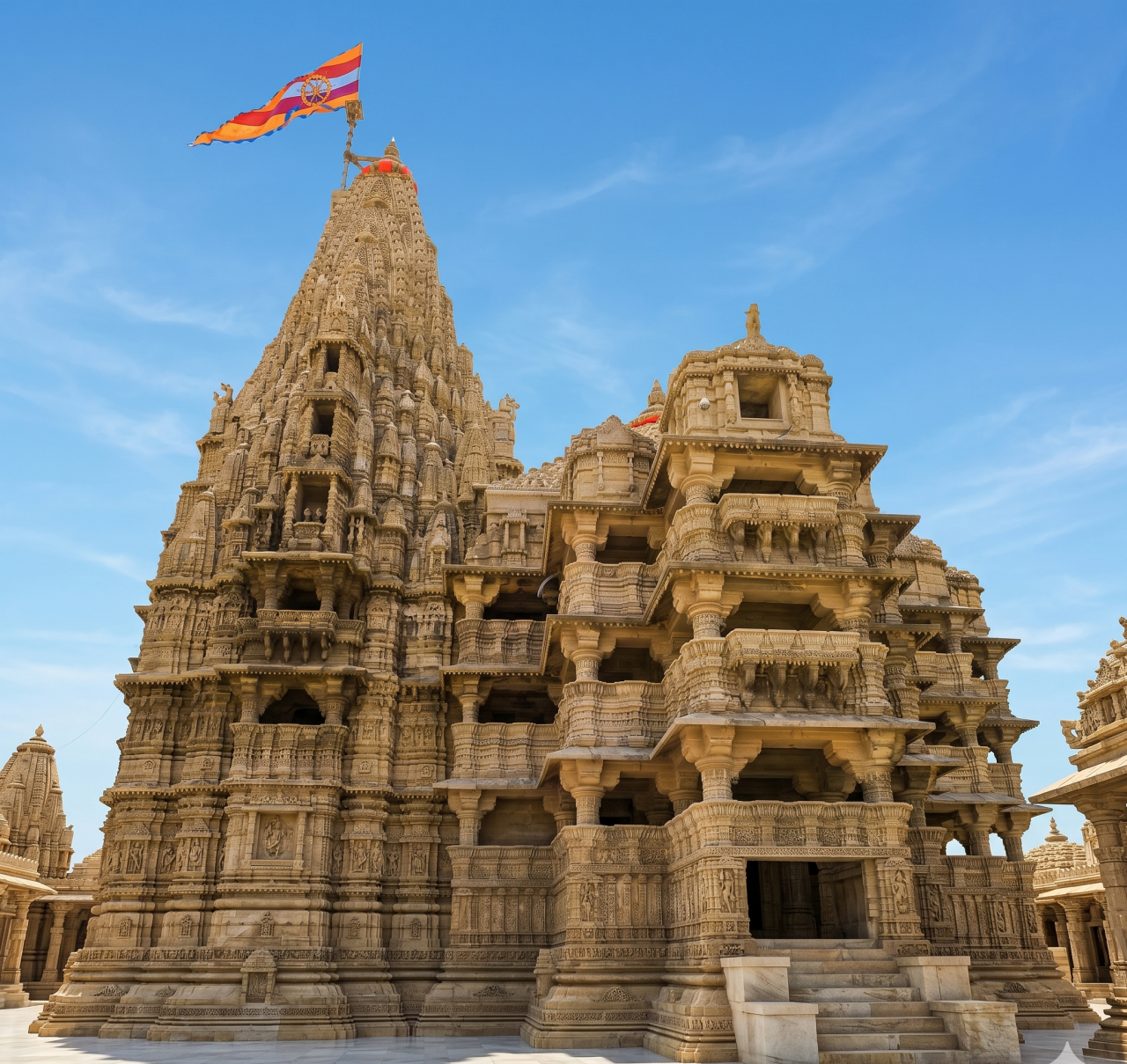
Dwarkadhish Temple is a famous Hindu temple dedicated to Lord Krishna, worshipped here as the “King of Dwarka” (Dwarkadhish). It is one of the Char Dham pilgrimage sites and a major center of Vaishnavism.
Banke Bihari Temple is a famous Hindu temple dedicated to Lord Krishna, worshipped here in his playful form as Banke Bihari, symbolizing divine love and joy. It is one of the most visited temples in Vrindavan, a town closely associated with Krishna’s childhood and pastimes. The temple was established in the 16th century by Swami Haridas, a legendary devotee and teacher of classical Indian music.
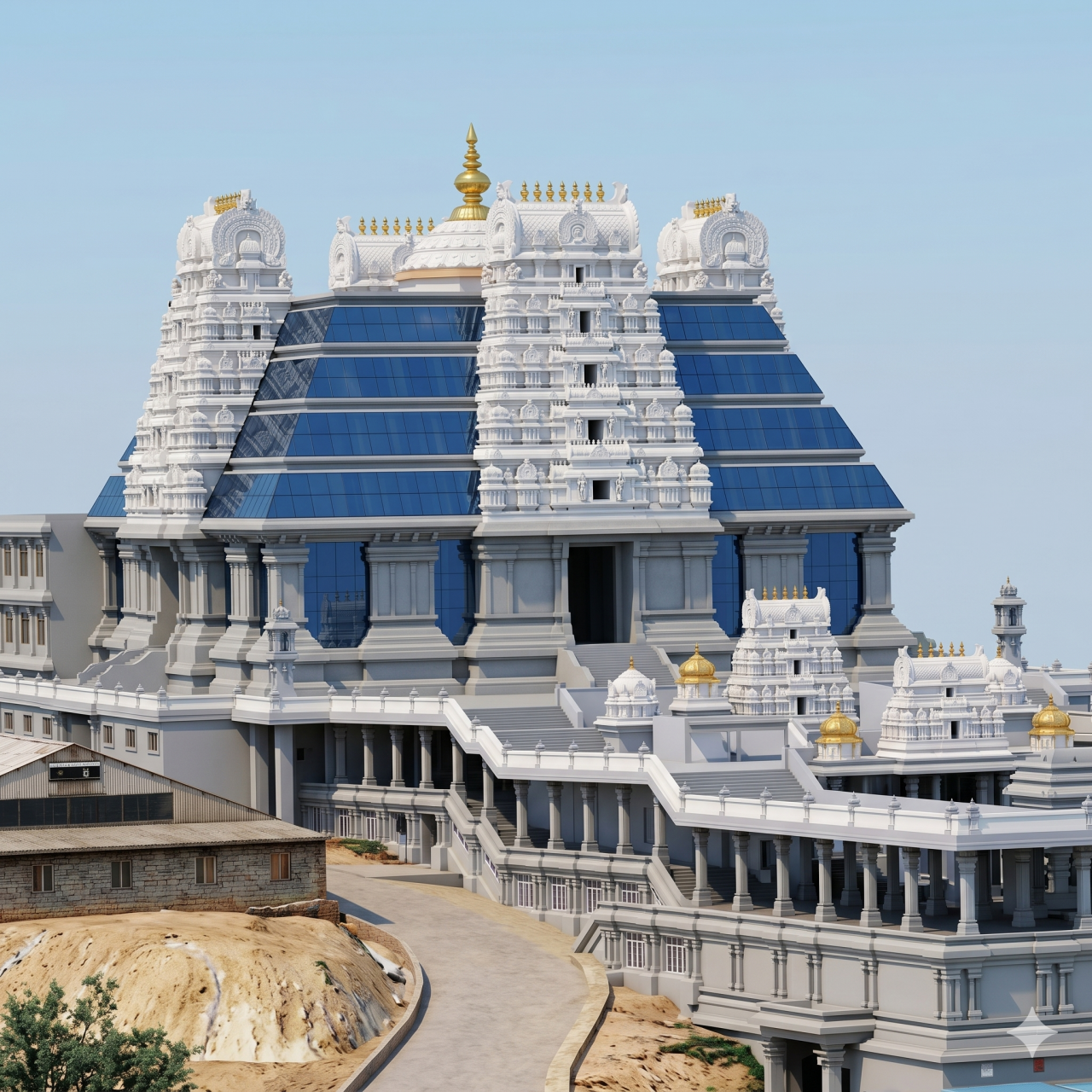
ISKCON Temple Bengaluru is a major Hindu temple dedicated to Lord Krishna and serves as a center of the International Society for Krishna Consciousness (ISKCON). It is one of the largest and most visited Krishna temples in South India. The temple was established in 1997 under the guidance of A. C. Bhaktivedanta Swami Prabhupada, the founder of ISKCON. Built to promote the teachings of Krishna as outlined in the Bhagavad Gita and other Vaishnava texts.
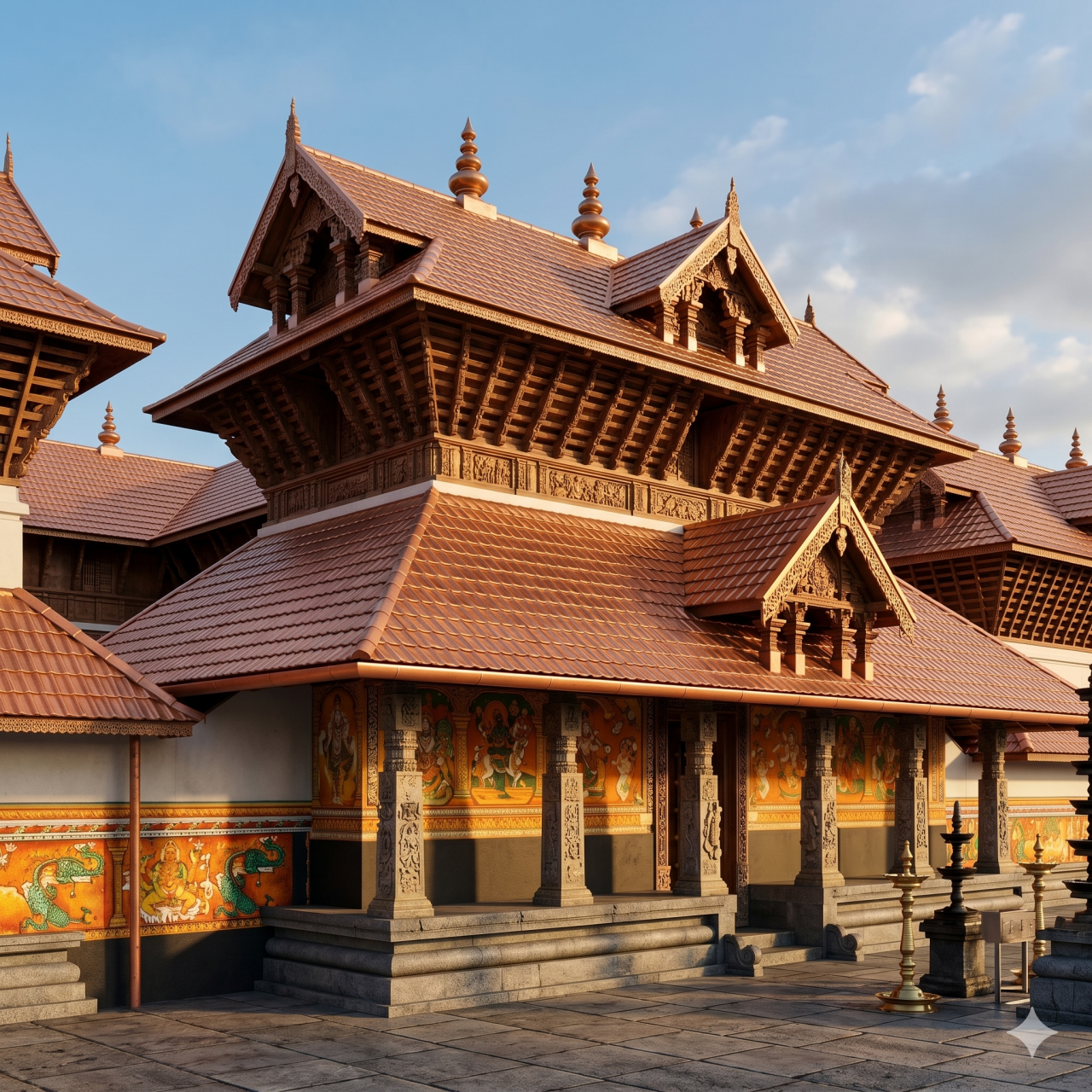
Guruvayur Temple is one of the most revered Hindu temples in India, dedicated to Lord Krishna, worshipped here as Guruvayurappan. It is often called the “Dwarka of the South” due to its significance and popularity among devotees. The temple is believed to have been established over 5,000 years ago, though the current structure dates to the 16th century. According to legend, the idol of Guruvayurappan was brought by Brihaspati (Guru), the teacher of the gods, from Dwarka, the kingdom of Krishna, to South India.
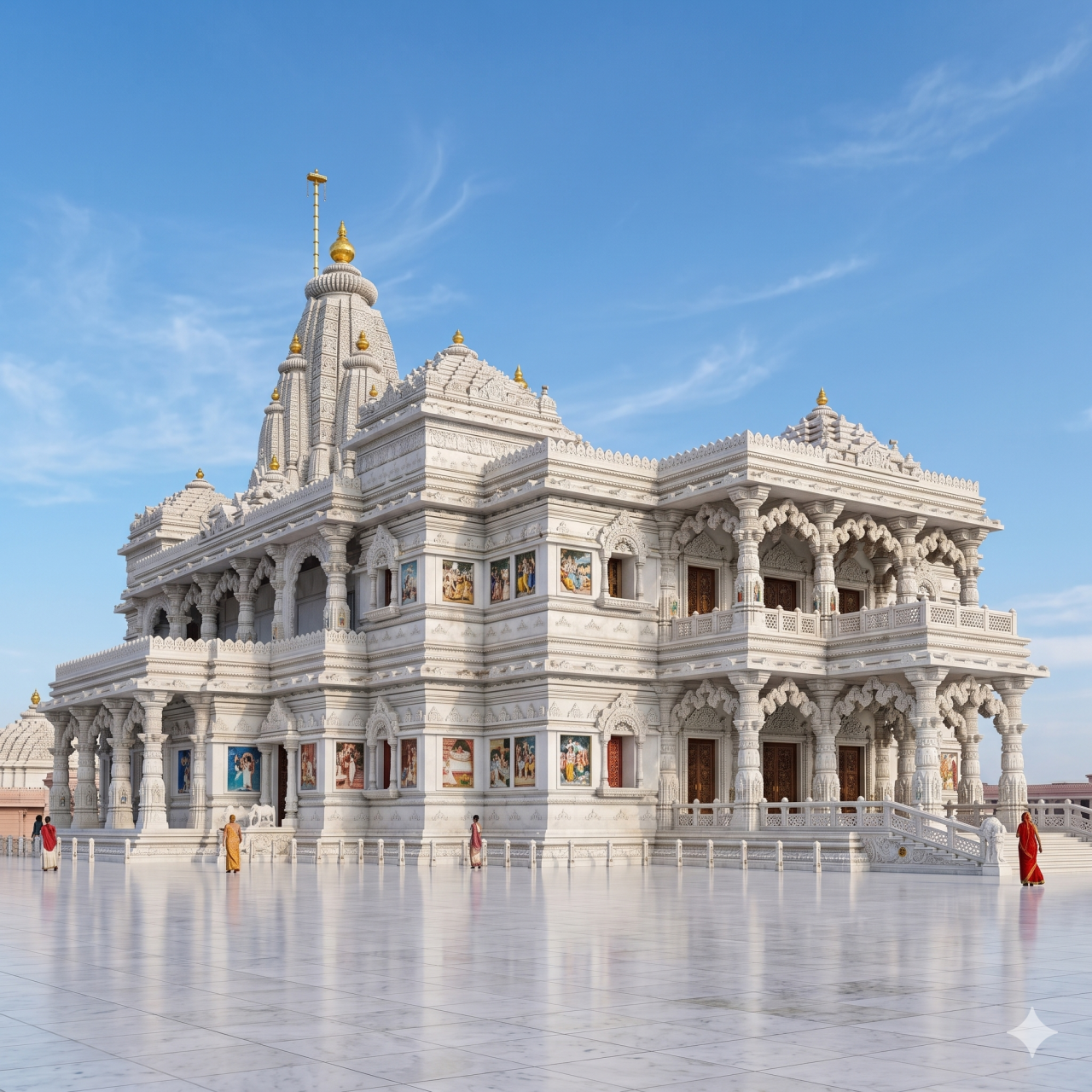
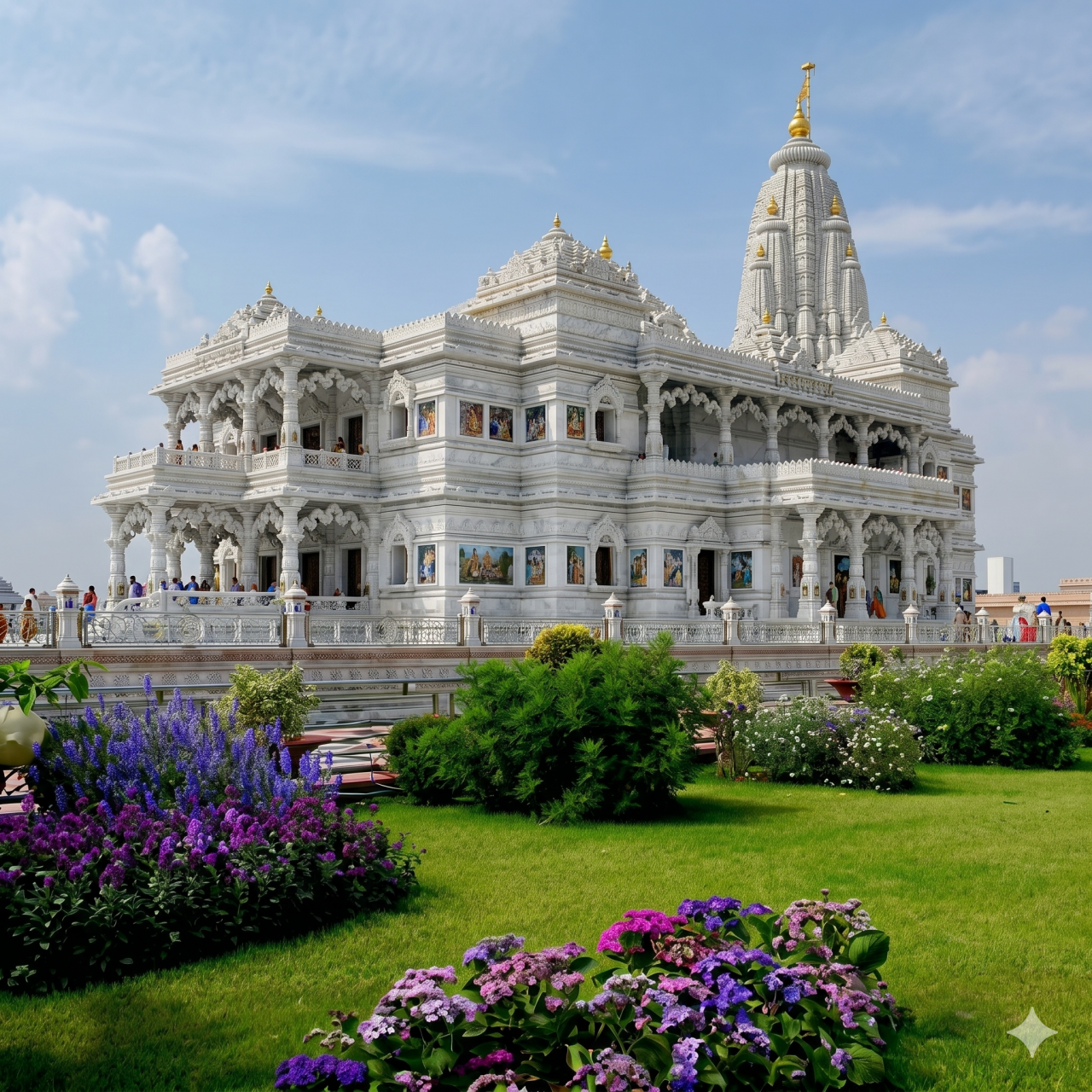
Prem Mandir is a modern and beautifully crafted Hindu temple dedicated to Lord Krishna and Radha, symbolizing divine love (“Prem”). It is a major spiritual and tourist attraction in Vrindavan. Prem Mandir was inaugurated in 2012 by Jagadguru Shri Kripaluji Maharaj, a spiritual leader and proponent of devotion to Radha-Krishna. The temple depicts scenes from Krishna’s life, including his childhood in Vrindavan, his divine love with Radha, and various pastimes celebrated in Hindu scriptures like the Bhagavata Purana.
Radha Vallabh Temple is a revered Hindu temple dedicated to Radha Krishna, emphasizing the worship of Radha as the supreme deity alongside Krishna. It is one of the key temples in Vrindavan, a town closely associated with Krishna’s life and pastimes. The temple was established in the 16th century by Swami Haridas, a legendary saint and musician, who was the spiritual guru of the famed classical singer Tansen. It is part of the Radha Vallabh Sampradaya, a devotional tradition focusing on the worship of Radha as the primary deity and Krishna as her consort.
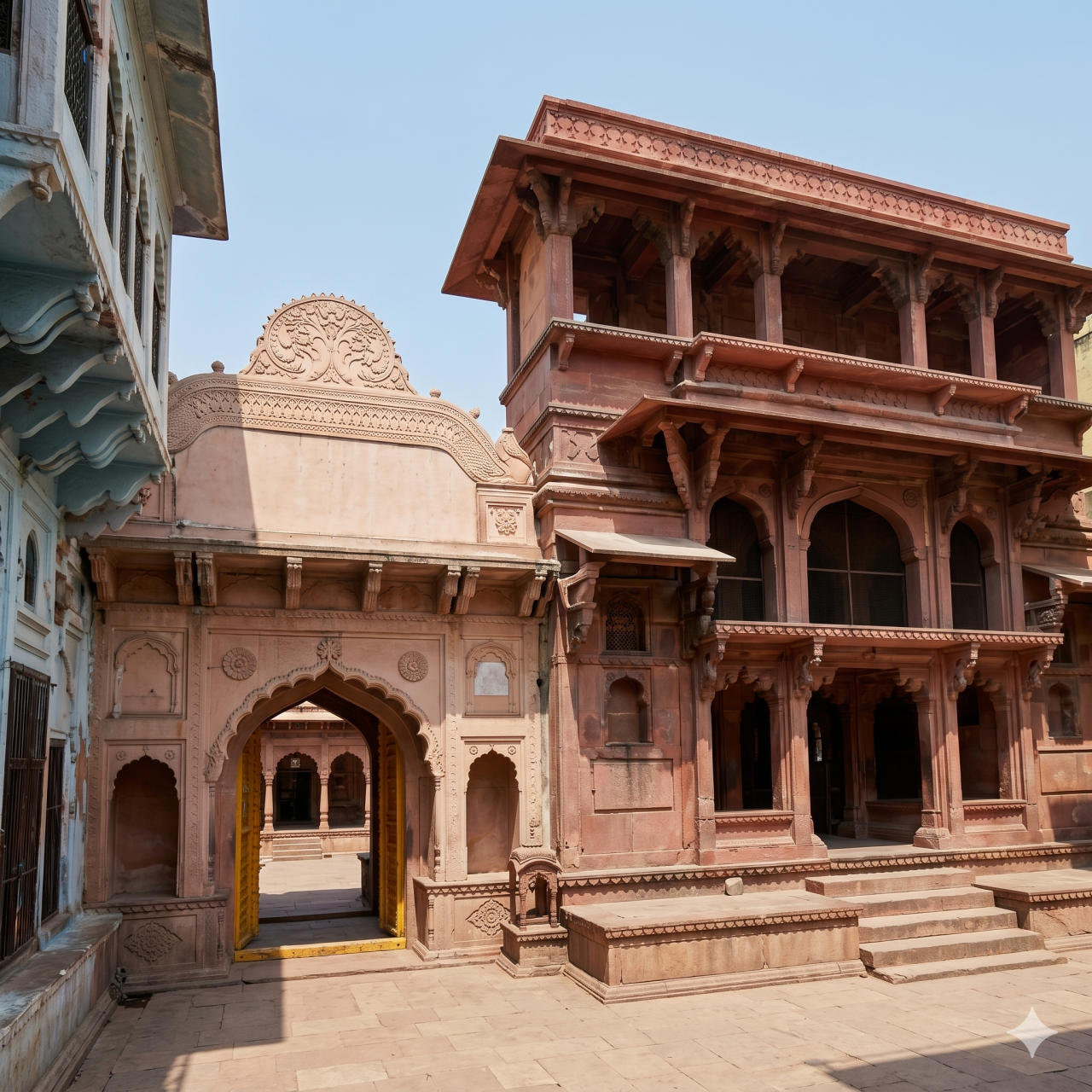
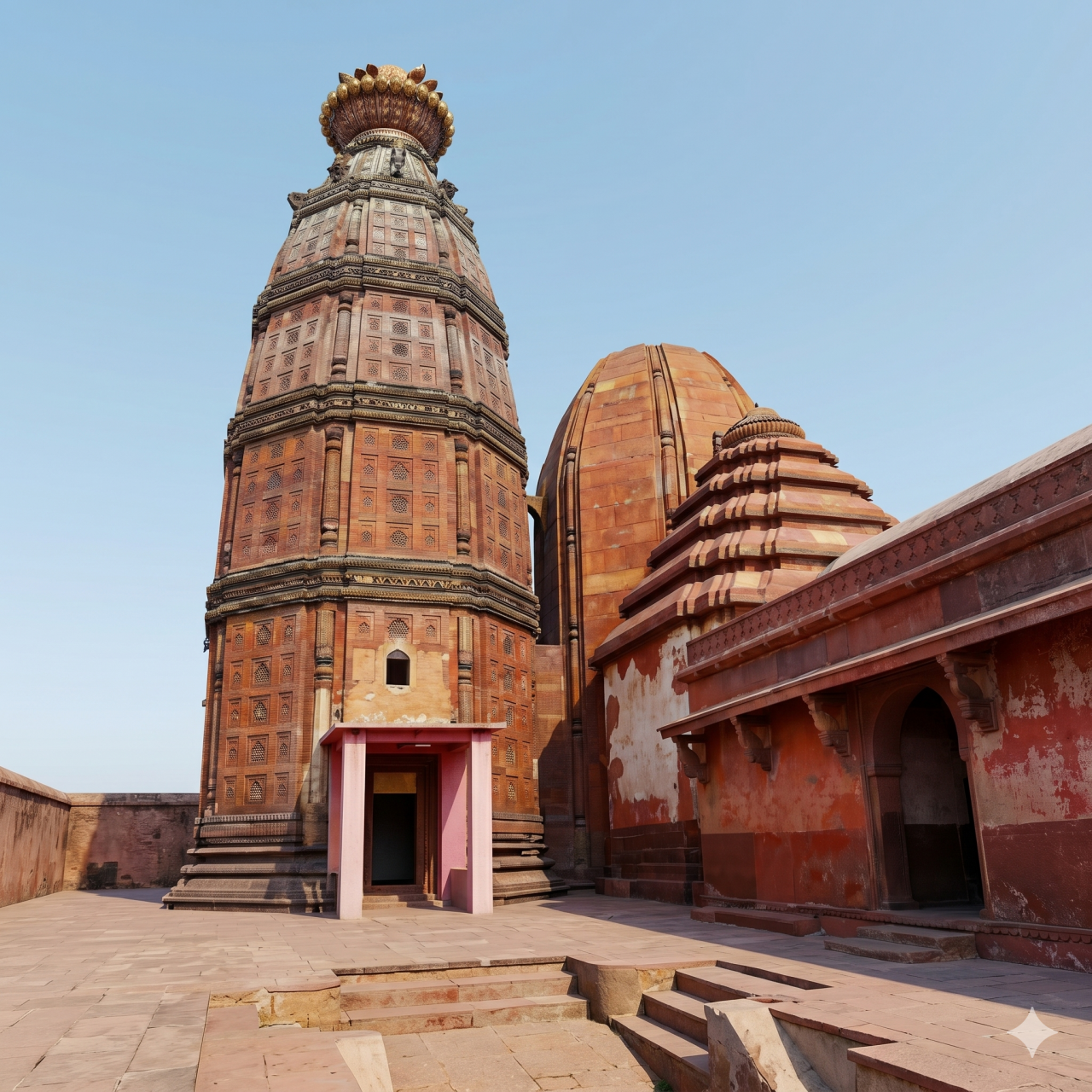
Radha Madan Mohan Temple is a historic Hindu temple dedicated to Lord Krishna in his form as Madan Mohan, along with Radha, symbolizing divine love and devotion. It is one of the oldest and most revered Krishna temples in Vrindavan. The temple is believed to have been established over 5,000 years ago by Sanjeevini Goswami, one of Krishna’s descendants.The deity of Madan Mohan was originally worshipped in Vrindavan but was temporarily shifted to Rajasthan during Mughal invasions to protect it from destruction; it was later brought back to Vrindavan.
Jugal Kishore Temple is a historic Hindu temple dedicated to Lord Krishna and Radha, worshipped together as the divine couple. It is one of the important Krishna temples in Vrindavan, known for its association with Krishna’s pastimes along the Yamuna River. The temple is believed to have been established several centuries ago by devotees inspired by the legends of Krishna and Radha.
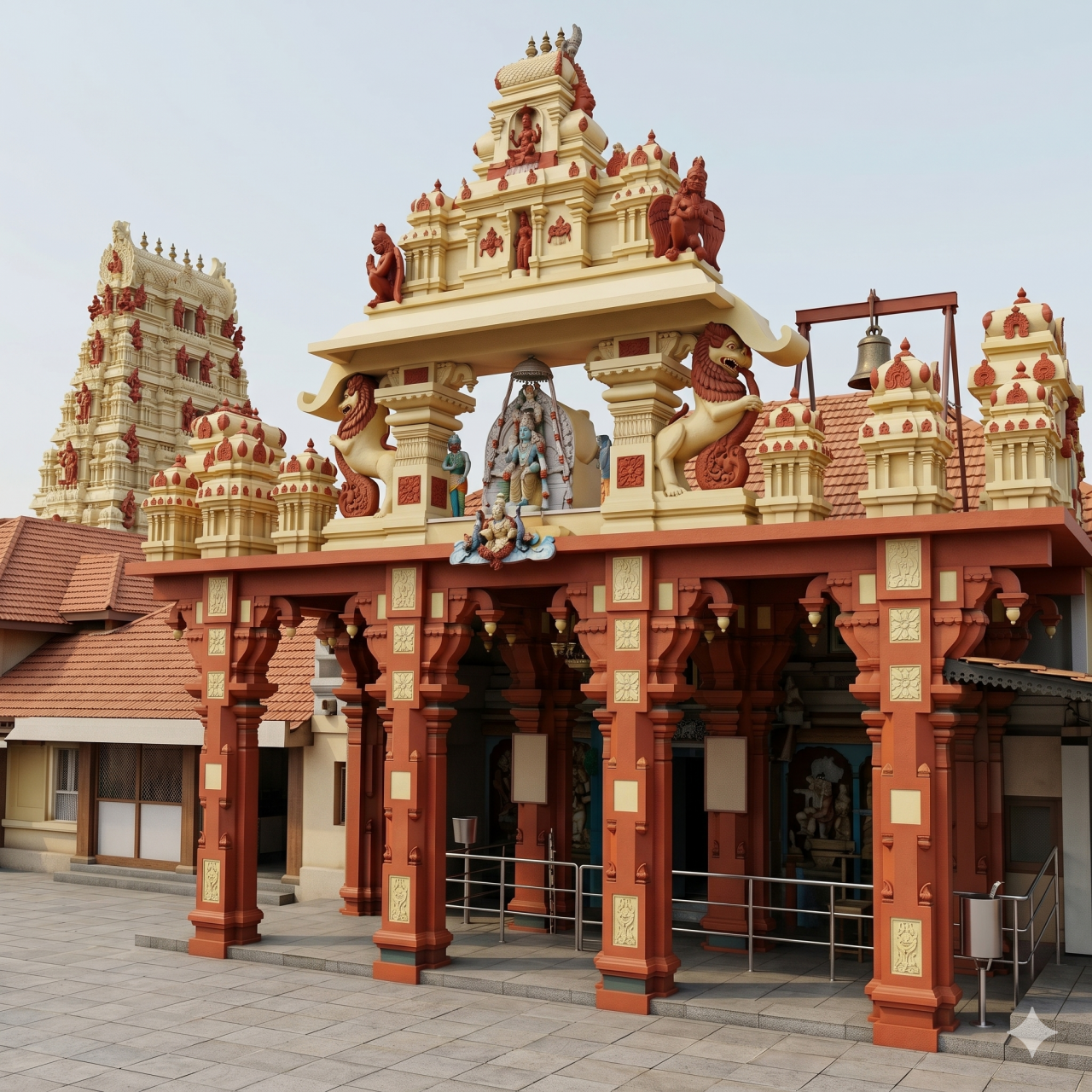
Sri Krishna Temple is a renowned Hindu temple dedicated to Lord Krishna, famously worshipped here as Udupi Krishna. It is one of the most significant Krishna temples in South India and a major pilgrimage center. The temple was established in the 13th century by the philosopher and saint Madhvacharya, who founded the Dvaita school of Vedanta. The deity of Krishna, known as Udupi Krishna, is a swayambhu (self-manifested) idol installed in a unique sanctum behind a small window called “Kanakana Kindi”, allowing devotees to have darshan.
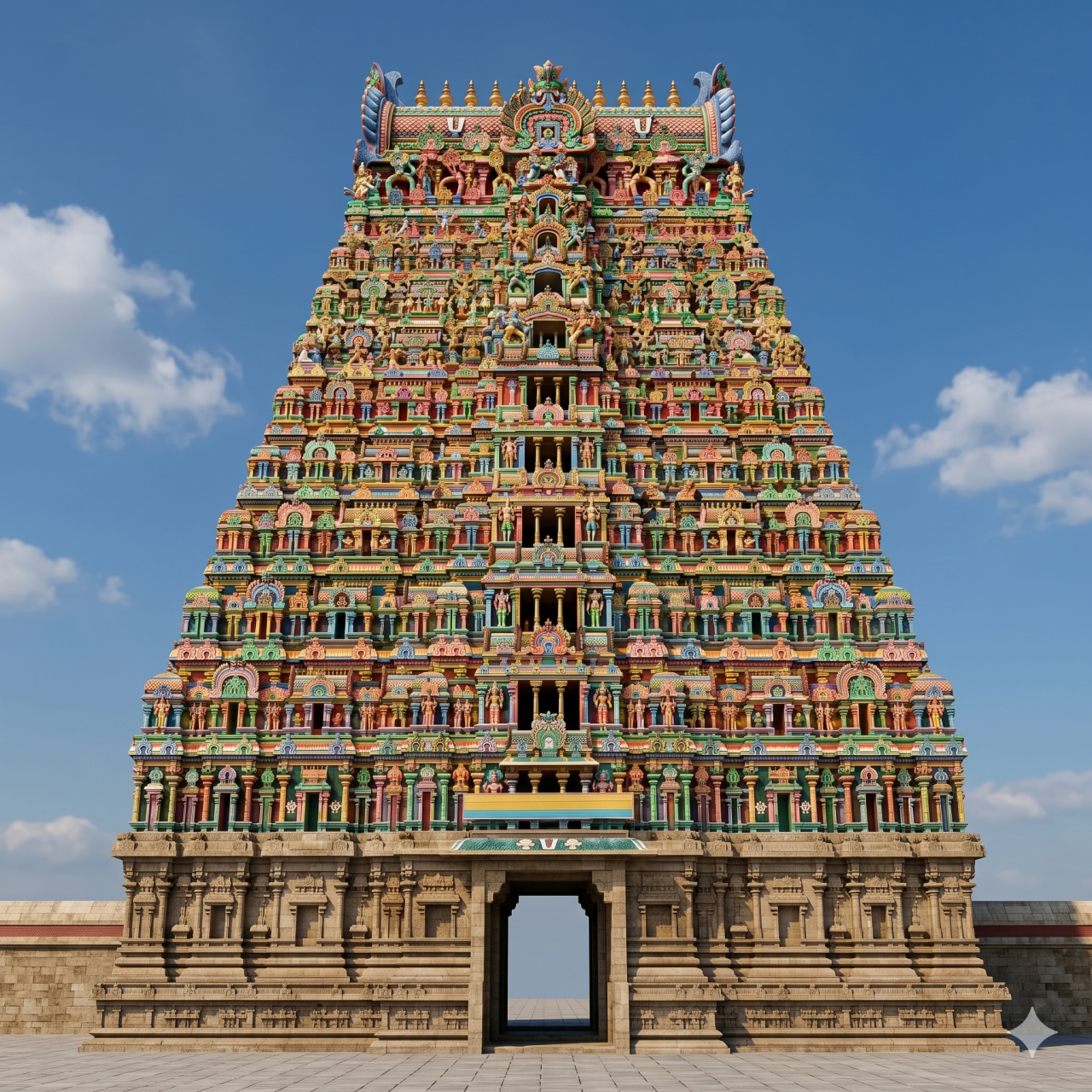
Rajagopalaswamy Temple is a prominent Hindu temple dedicated to Lord Krishna, worshipped here as Rajagopalaswamy, the “King of Cowherds.” It is one of the largest Krishna temples in South India and a major center of devotion in Tamil Nadu. The temple was constructed during the 16th–17th century under the patronage of the Vijayanagara kings and later local chieftains, reflecting the Dravidian style of architecture. Dedicated to Rajagopalaswamy (Krishna in his royal cowherd form), the temple symbolizes Krishna as the supreme ruler and protector of devotees.
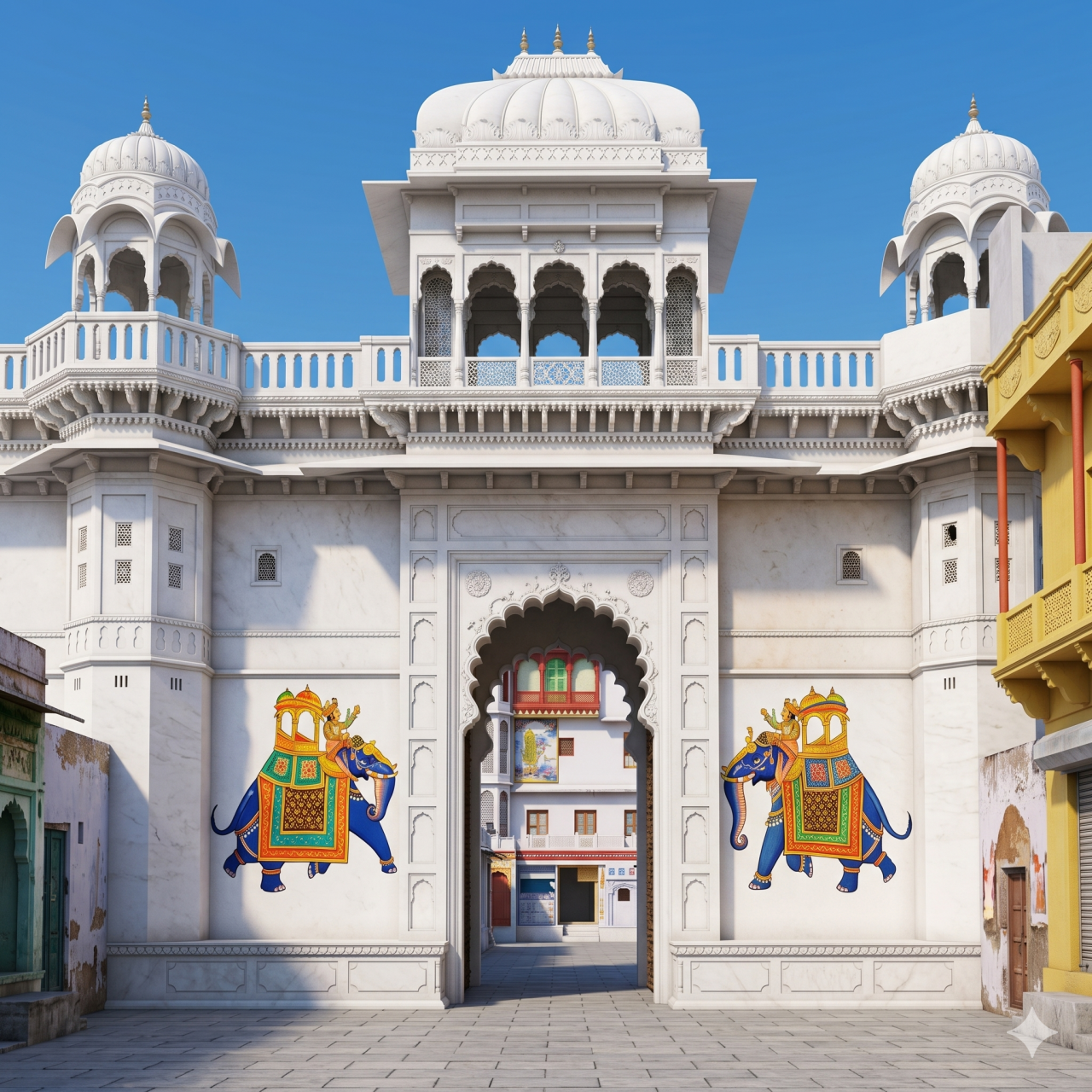
Shrinathji Temple is a famous Hindu temple dedicated to Lord Krishna in his child form as Shrinathji, depicting Krishna lifting the Govardhan Hill. It is a major pilgrimage site in Rajasthan and an important center of the Pushtimarg (Vaishnavite) tradition. The temple was established in the 17th century (1669 CE) when the idol of Shrinathji was moved from Mathura to protect it from Mughal invasions. The deity represents Krishna at seven years old, holding up the Govardhan Hill to protect villagers from torrential rains.
Govind Dev Ji Temple is a prominent Hindu temple dedicated to Lord Krishna, worshipped here as Govind Dev Ji. It is one of the most significant Krishna temples in Jaipur and a major center of devotion in the region. The temple was originally established in the 18th century by Maharaja Sawai Jai Singh II, the founder of Jaipur. The deity, Govind Dev Ji, is a form of Krishna brought from Vrindavan, emphasizing the continuity of Krishna worship from Mathura and Braj to Jaipur.
Sakshigopal Temple is a revered Hindu temple dedicated to Lord Krishna, also worshipped here as Sakshi Gopala. It is famous for its association with justice, where devotees seek fulfillment of vows and resolution of disputes. The temple is believed to have been built in the 18th century, though the deity of Sakshi Gopala has been worshipped for centuries in the region. “Sakshi” means witness, and the deity is considered a divine witness to vows, promises, and oaths taken by devotees. Many locals come to the temple to seek justice and protection through Krishna’s divine witness.
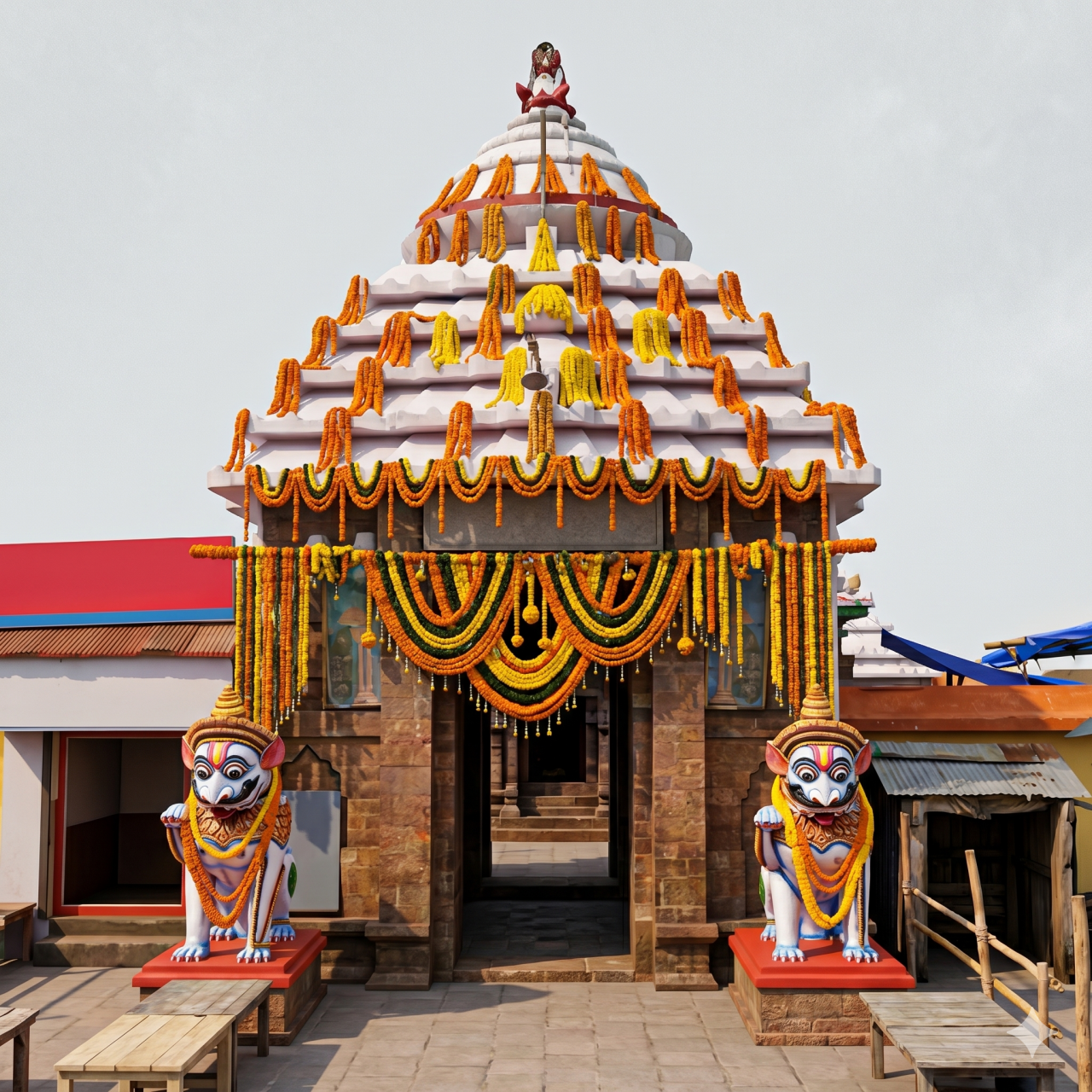
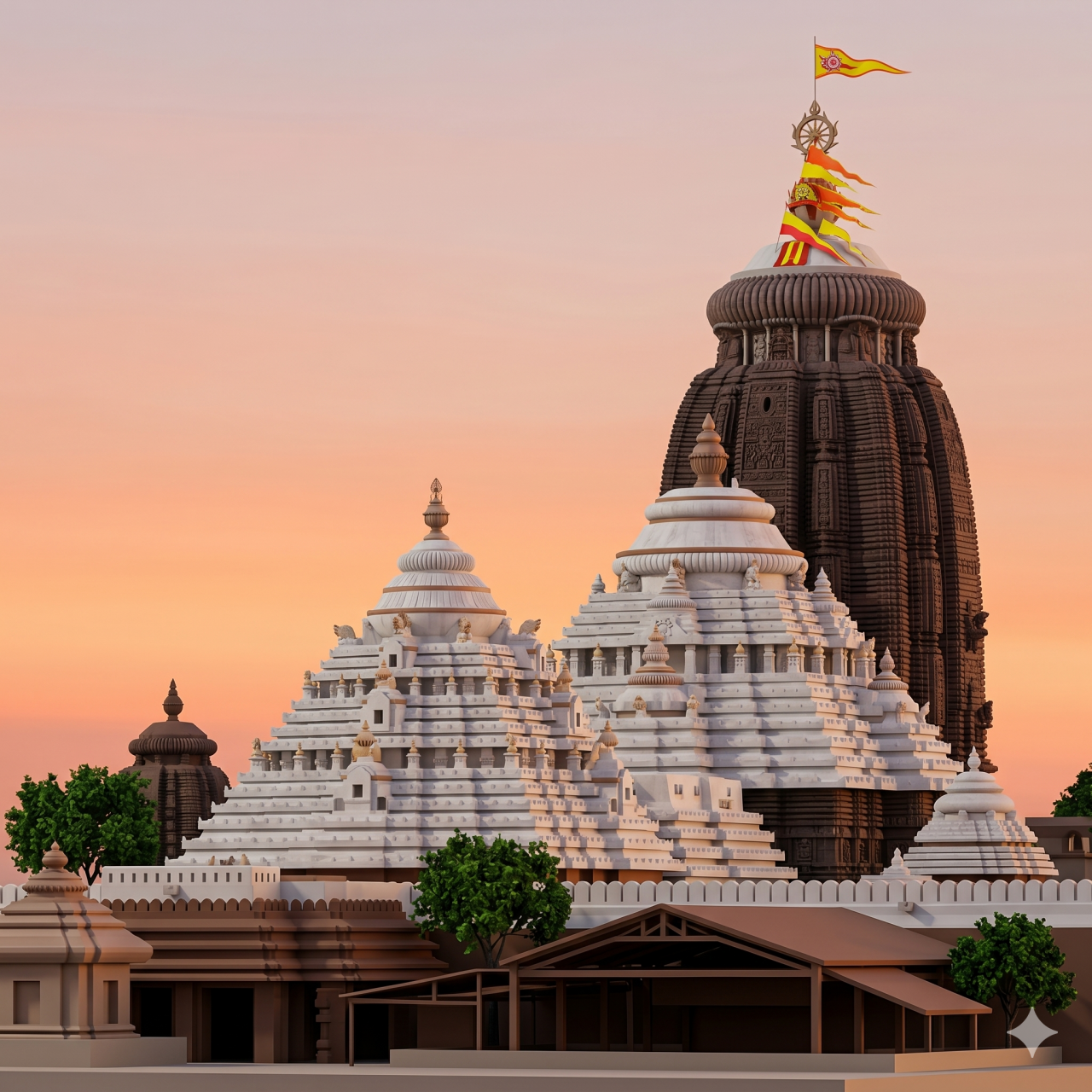
Jagannath Temple is one of the most famous Hindu temples in India, dedicated to Lord Jagannath, along with his siblings Balabhadra and Goddess Subhadra. It is a central pilgrimage site for Vaishnavites and one of the Char Dham temples, attracting millions of devotees annually. The current structure of the Jagannath Temple was built in the 12th century CE by King Anantavarman Chodaganga Deva of the Eastern Ganga dynasty. The temple is historically linked with the worship of Krishna, who is revered here as Jagannath, meaning “Lord of the Universe.”
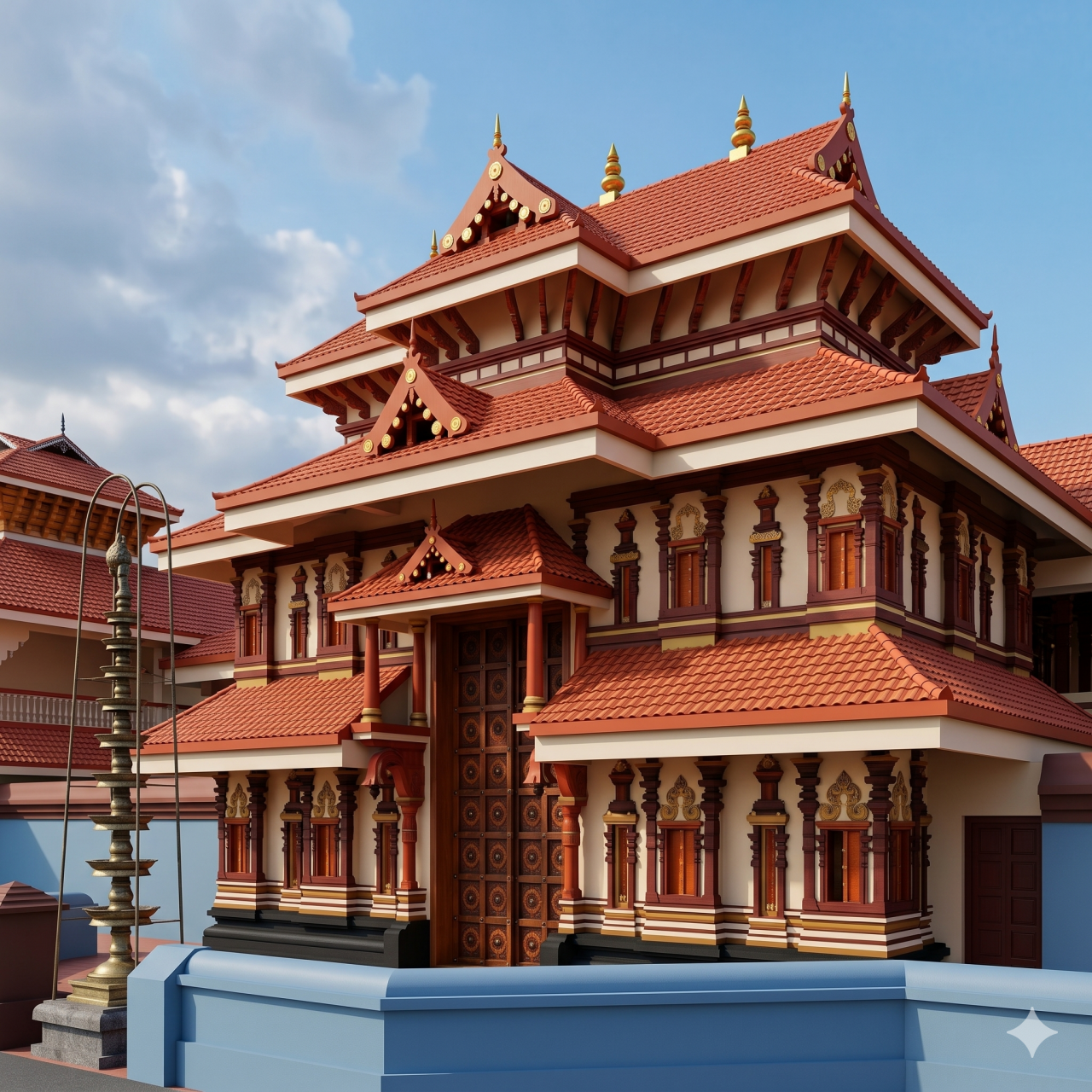
Thiruvarppu Sri Krishna Temple is a revered Hindu temple dedicated to Lord Krishna, worshipped here in the form of Gopala Krishna, symbolizing his playful childhood pastimes. It is an important spiritual center in the Kottayam district of Kerala.The temple is believed to have been established several centuries ago, with origins dating back to the 12th–13th century CE. The main deity, Thiruvarppu Krishna, is depicted as a child holding a butter ball, representing Krishna’s playful and mischievous nature.
Naulakha Temple is a historic Hindu temple dedicated to Lord Krishna, built in the 18th century. It is renowned for its architectural beauty and association with Krishna devotion in the region. The temple was constructed in 1772 CE by Raja Jagannath Singh, a local king who spent nine lakh rupees (Naulakha) on its construction, giving the temple its name. The temple houses an idol of Lord Krishna, reflecting devotional practices of the 18th-century Vaishnavite tradition in eastern India.
Shri Keshavraiji Temple is a revered Hindu temple dedicated to Lord Krishna, worshipped here as Keshavraiji, representing Krishna in his royal form. It is one of the prominent Krishna temples on Bet Dwarka, an island considered sacred in the Krishna tradition. The temple is believed to have been built several centuries ago, with origins tracing back to the period of Krishna’s life in Dwarka, according to local legends. Shri Keshavraiji is revered as the form of Krishna who protected Dwarka and guided devotees, symbolizing divinity and royal leadership. Bet Dwarka is also known for other smaller Krishna shrines, making it a complete pilgrimage experience for devotees.
Jagannath Mandir is a prominent Hindu temple dedicated to Lord Jagannath, along with his siblings Balabhadra and Subhadra. It is a major center of Krishna devotion in Ahmedabad and serves as a spiritual and cultural hub for devotees in Gujarat. The temple was established in the 20th century, inspired by the architectural style of the Jagannath Temple in Puri. The temple is part of the network of Jagannath temples in Gujarat, which reflect the influence of Puri’s Jagannath tradition on local communities.
Ranchodraiji Temple is a famous Hindu temple dedicated to Lord Krishna, worshipped here in his form as Ranchodrai, meaning “the one who fled” (symbolizing Krishna’s playful escape from danger). It is a major pilgrimage center in Gujarat and an important site for Vaishnav devotees. The temple was originally built in the 18th century, though legends about Krishna’s pastime in Dakor date back several centuries earlier. The deity Ranchodraiji represents Krishna fleeing from the demon king Kansa, symbolizing divine protection and grace for devotees.
Khira Chora Gopinath Temple is a revered Hindu temple dedicated to Lord Krishna, worshipped here as Gopinath, meaning “Lord of the Gopis.” It is famous for its unique legend associated with sweetened milk (khira) and Krishna’s playful pastimes. The temple was established in the 16th century, with origins rooted in local legends of Krishna and his consort Radha. The name “Khira Chora” (meaning “stolen milk”) comes from a story where Krishna supposedly took a portion of sweetened milk offered to the deity, highlighting his playful and loving nature.
ISKCON Temple Mayapur is a major Hindu temple dedicated to Lord Krishna and Radha, forming the spiritual heart of the International Society for Krishna Consciousness (ISKCON) worldwide. It is one of the largest and most significant Krishna pilgrimage centers in India. The temple was established in 1967 by A.C. Bhaktivedanta Swami Prabhupada, the founder of ISKCON, to promote Krishna devotion and the teachings of the Bhagavad Gita. Mayapur is historically significant as it is considered the birthplace of Chaitanya Mahaprabhu (1486–1534), a saint and proponent of the Bhakti movement who popularized Gaudiya Vaishnavism.
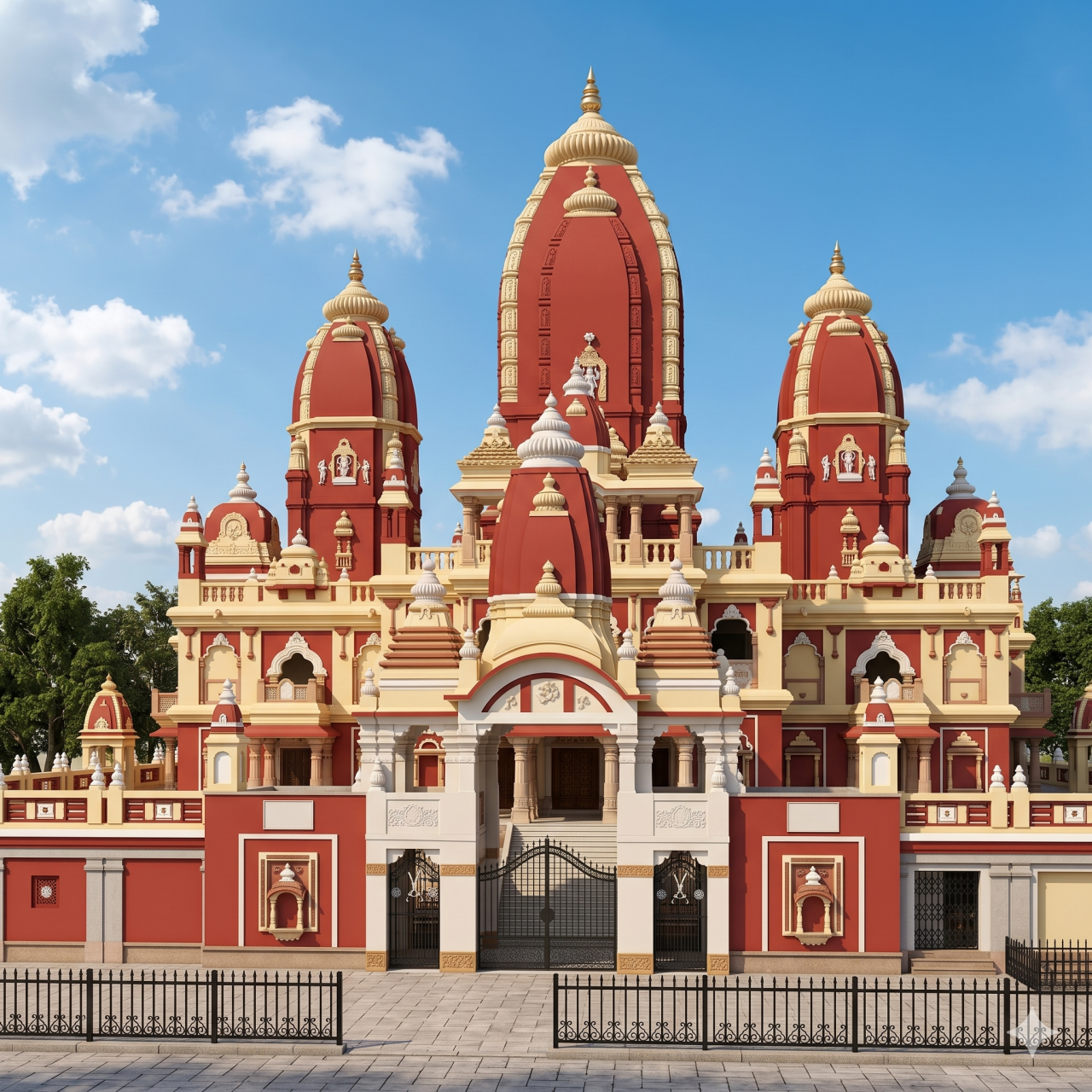
ISKCON Temple Delhi is a prominent Hindu temple dedicated to Lord Krishna and Radha, operated by the International Society for Krishna Consciousness (ISKCON). It serves as a major center for devotion, spiritual learning, and cultural activities in India’s capital. The temple was established in 1998 by ISKCON, as part of their mission to spread Krishna devotion and teachings of the Bhagavad Gita. Delhi’s ISKCON Temple was built to provide urban devotees a place for worship, meditation, and cultural engagement in the midst of the city.
ISKCON Temple Mumbai is a well-known Hindu temple dedicated to Lord Krishna and Radha, managed by the International Society for Krishna Consciousness (ISKCON). It is a major spiritual and cultural hub in Mumbai, attracting devotees and tourists alike. The temple was established in 1978 by ISKCON, as part of its global mission to promote Krishna devotion and the teachings of the Bhagavad Gita. Built in a modern architectural style with traditional Vaishnavite elements, the temple provides a spiritual oasis amid Mumbai’s bustling urban environment. The main deities, Radha and Krishna, are worshipped through daily rituals, aarti, and kirtans, attracting thousands of devotees every day.
ISKCON Temple Kolkata is a prominent Hindu temple dedicated to Lord Krishna and Radha, managed by the International Society for Krishna Consciousness (ISKCON). It is one of the largest ISKCON temples in India and a key center of Krishna devotion in eastern India. The temple was established in 1996 by ISKCON, inspired by the mission of A.C. Bhaktivedanta Swami Prabhupada to promote Krishna devotion and spiritual education. Built to provide devotees in Kolkata a spiritual sanctuary for worship, meditation, and cultural engagement, the temple reflects traditional Vaishnavite practices within a modern complex. The main deities, Radha and Krishna, are worshipped through daily rituals, kirtans, aratis, and devotional programs.