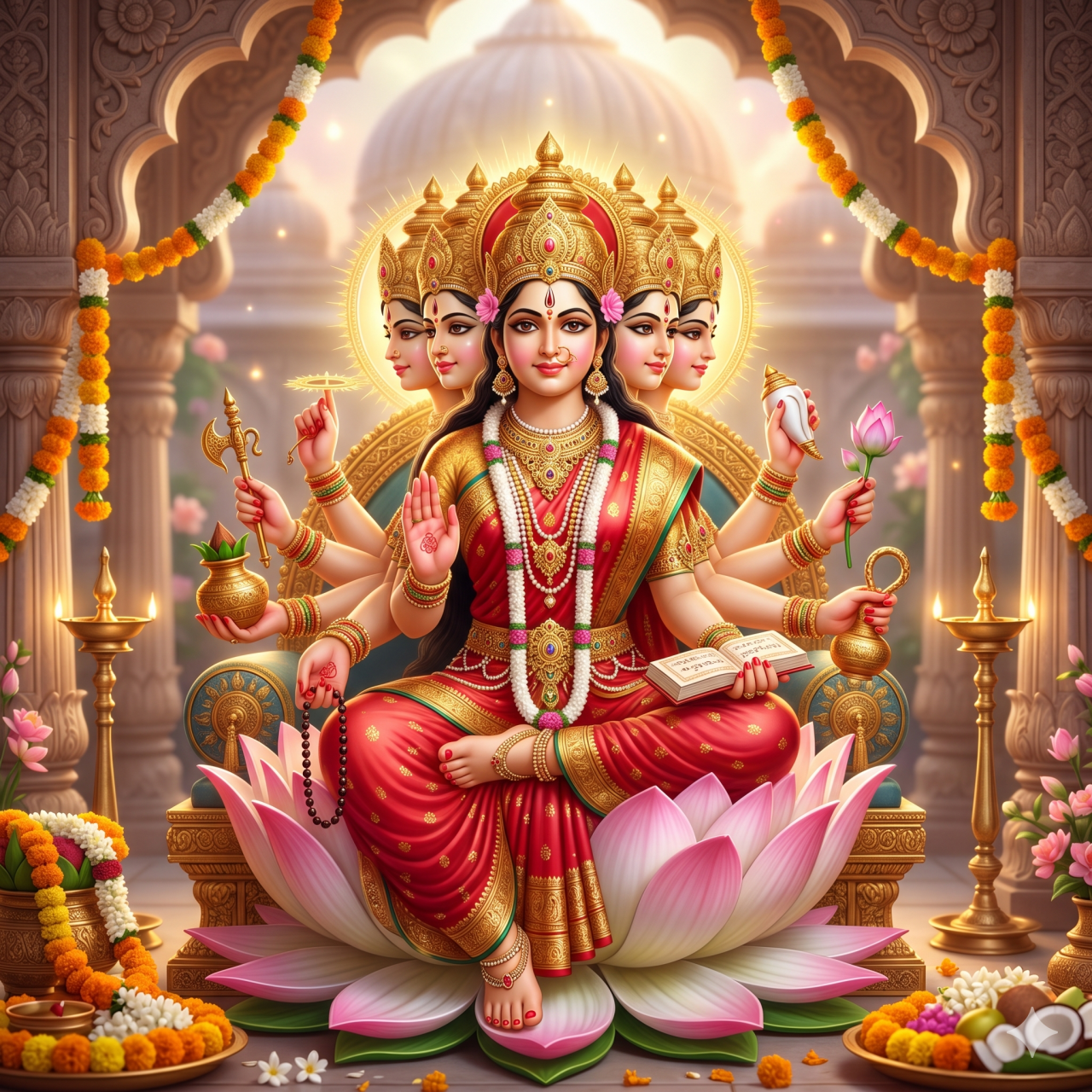
Gayatri is traditionally depicted as a radiant goddess with five heads and ten eyes, symbolizing her omnipresence and all-seeing nature. The five heads are also interpreted as representing the five pranas (life forces), the five elements (earth, water, fire, air, and ether), and the five koshas or layers of human existence. She is often shown seated on a red lotus, symbolizing purity, spiritual awakening, and divine truth. Her form is not merely physical but deeply symbolic, representing cosmic energy and divine intelligence.
In Hindu belief, Gayatri is considered the mother of the Vedas, earning her the title “Veda Mata.” This means she is the source of sacred knowledge contained in the ancient scriptures. She is closely associated with Savitr, the solar deity, and is sometimes regarded as his consort or divine energy. The Gayatri Mantra, dedicated to her, is found in the Rigveda and is considered a universal prayer for enlightenment:
“Om Bhur Bhuvah Swaha, Tat Savitur Varenyam, Bhargo Devasya Dhimahi, Dhiyo Yo Nah Prachodayat.”
This mantra is a prayer for the illumination of the intellect. It asks the divine light of the Supreme Being to inspire and guide human understanding toward truth and righteousness. Reciting this mantra is believed to purify the mind, enhance wisdom, and awaken spiritual consciousness. Read More for the Mantra Meaning.
Philosophically, Goddess Gayatri represents the fusion of knowledge, energy, and consciousness. She is not only a deity to be worshipped externally but also a symbol of inner awakening. In many interpretations, she is seen as the divine force that resides within every individual, guiding the mind from ignorance to enlightenment. Her presence signifies the journey from darkness to light, from material illusion to spiritual reality.
In the Puranic tradition, Gayatri is also identified with other forms of the Divine Mother, including Saraswati (goddess of knowledge), Lakshmi (goddess of prosperity), and Parvati (goddess of power). Together, these forms represent the holistic nature of feminine divinity. In some scriptures, she is described as the consort of Brahma, the creator, symbolizing the essential role of wisdom in creation itself.
Worship of Goddess Gayatri is deeply rooted in daily spiritual practice for many Hindus. Devotees often chant the Gayatri Mantra during sunrise and sunset, known as Sandhya Vandana, as these times are considered highly auspicious for spiritual reflection. The practice is believed to strengthen concentration, cleanse negative thoughts, and bring mental clarity.
Beyond ritual worship, Gayatri holds a universal message. She represents the idea that true knowledge is divine and that enlightenment is accessible to all who seek it sincerely. Her symbolism transcends religious boundaries, emphasizing intellectual awakening, moral integrity, and spiritual growth.
In essence, Goddess Gayatri embodies the highest ideals of wisdom and divine illumination. She is the eternal mother of knowledge, guiding humanity toward truth, harmony, and self-realization. Through her mantra and symbolism, she continues to inspire seekers across generations to rise beyond ignorance and embrace the light of higher consciousness.
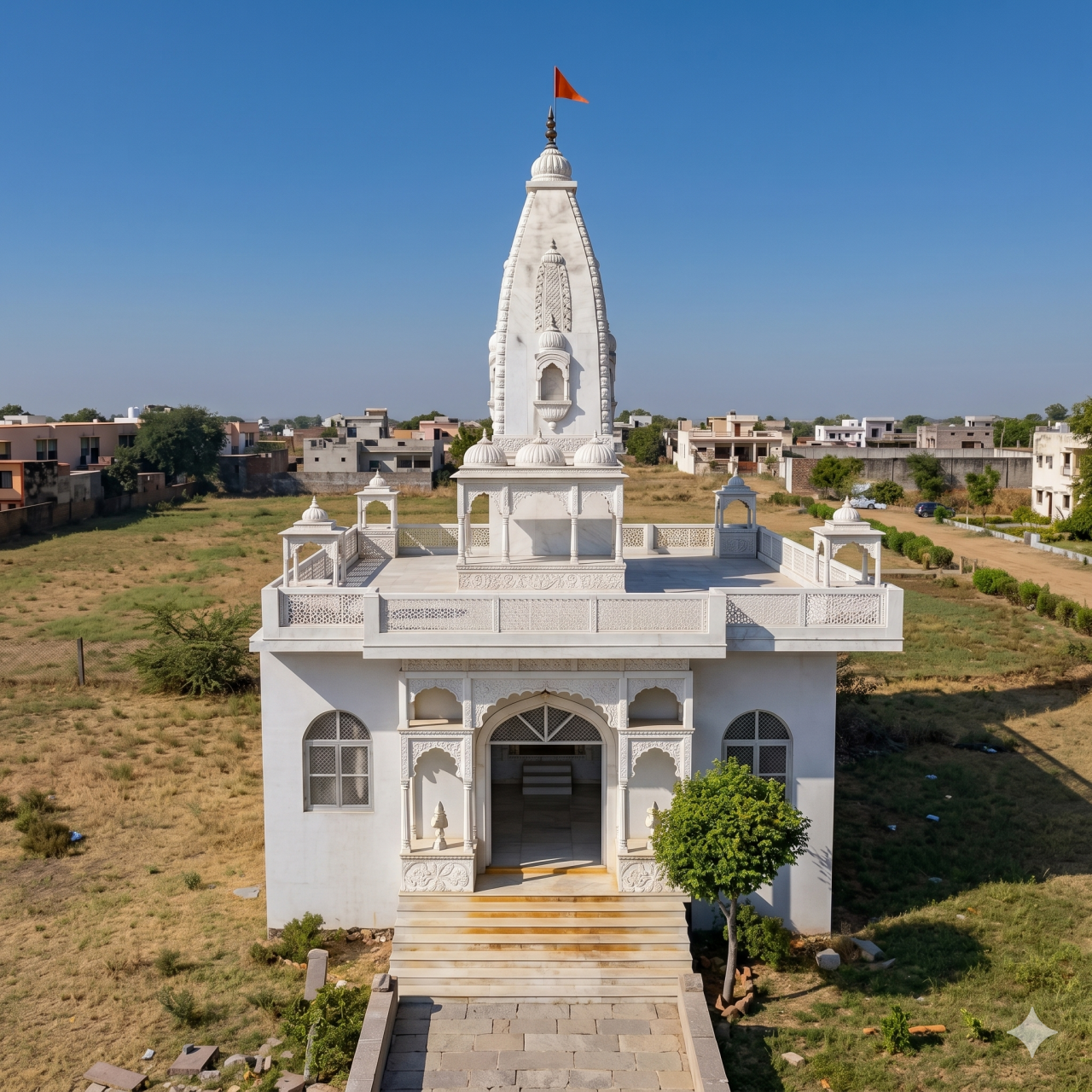
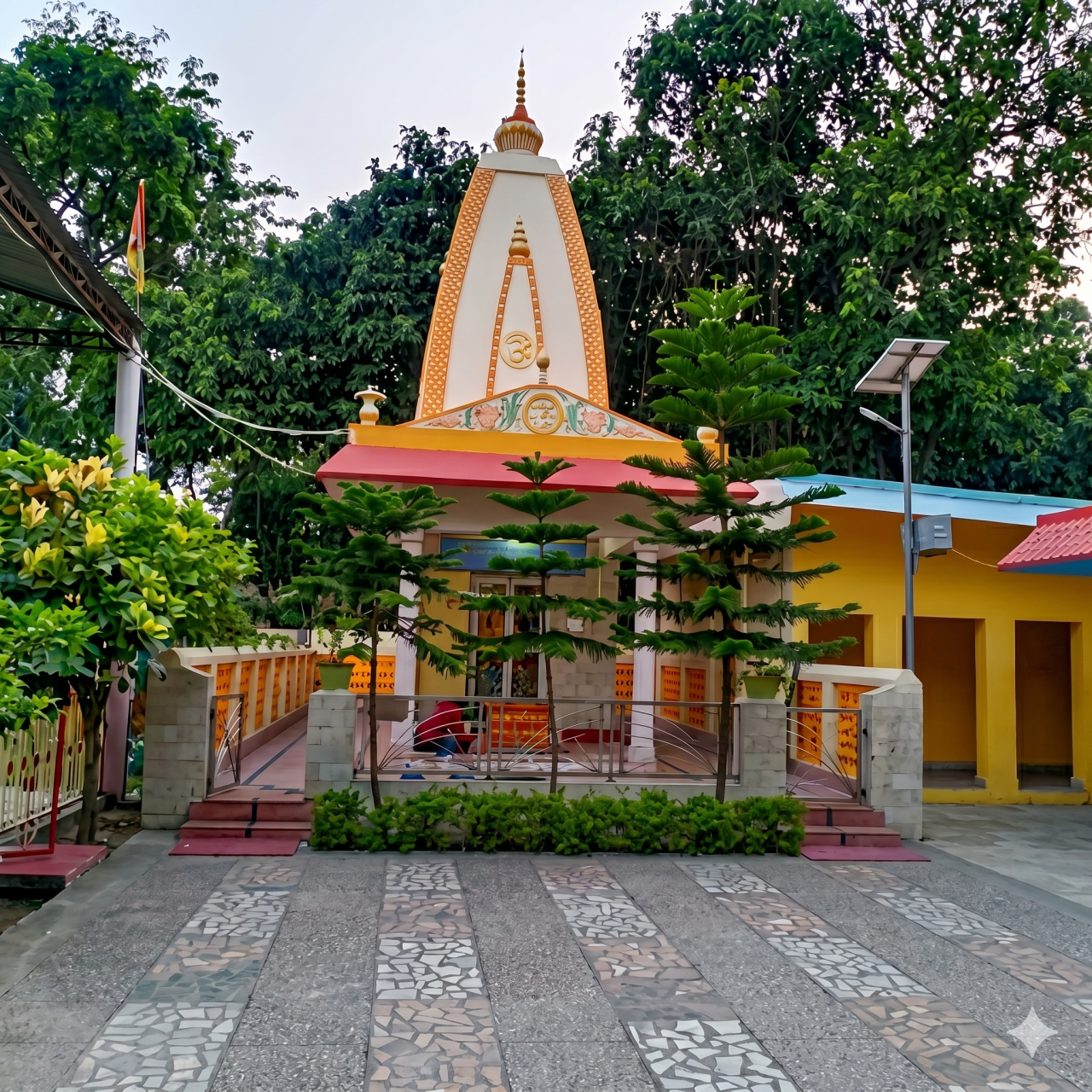
Gayatri Shaktipeeth Dwarka is a revered Hindu pilgrimage site and temple complex located in Dwarka, Gujarat, India. It is one of the major Gayatri Shaktipeeths, dedicated to the worship of Goddess Gayatri, symbolizing divine knowledge and spiritual awakening.
The Gayatri Mata Temple in Pushkar, Rajasthan, India, is a revered Hindu shrine dedicated to Goddess Gayatri, the consort of Sage Brahma. Located on a hill overlooking the sacred Pushkar Lake, the temple is an important pilgrimage spot offering panoramic views of the town and surrounding Aravalli hills.
Gayatri Gyan Mandir Mahuda is a Hindu temple and spiritual learning center located in Mahuda, Dhanbad, Jharkhand, India. Dedicated to Goddess Gayatri, it serves as a local hub for meditation, rituals, and community gatherings inspired by the teachings of the All World Gayatri Pariwar movement.
Ved Mata Gayatri Mandir Kushinagar is a Hindu temple located in the historic town of Kushinagar, Uttar Pradesh, India. Dedicated to Goddess Gayatri, it serves as a spiritual and cultural center for devotees and visitors exploring the region’s religious heritage.
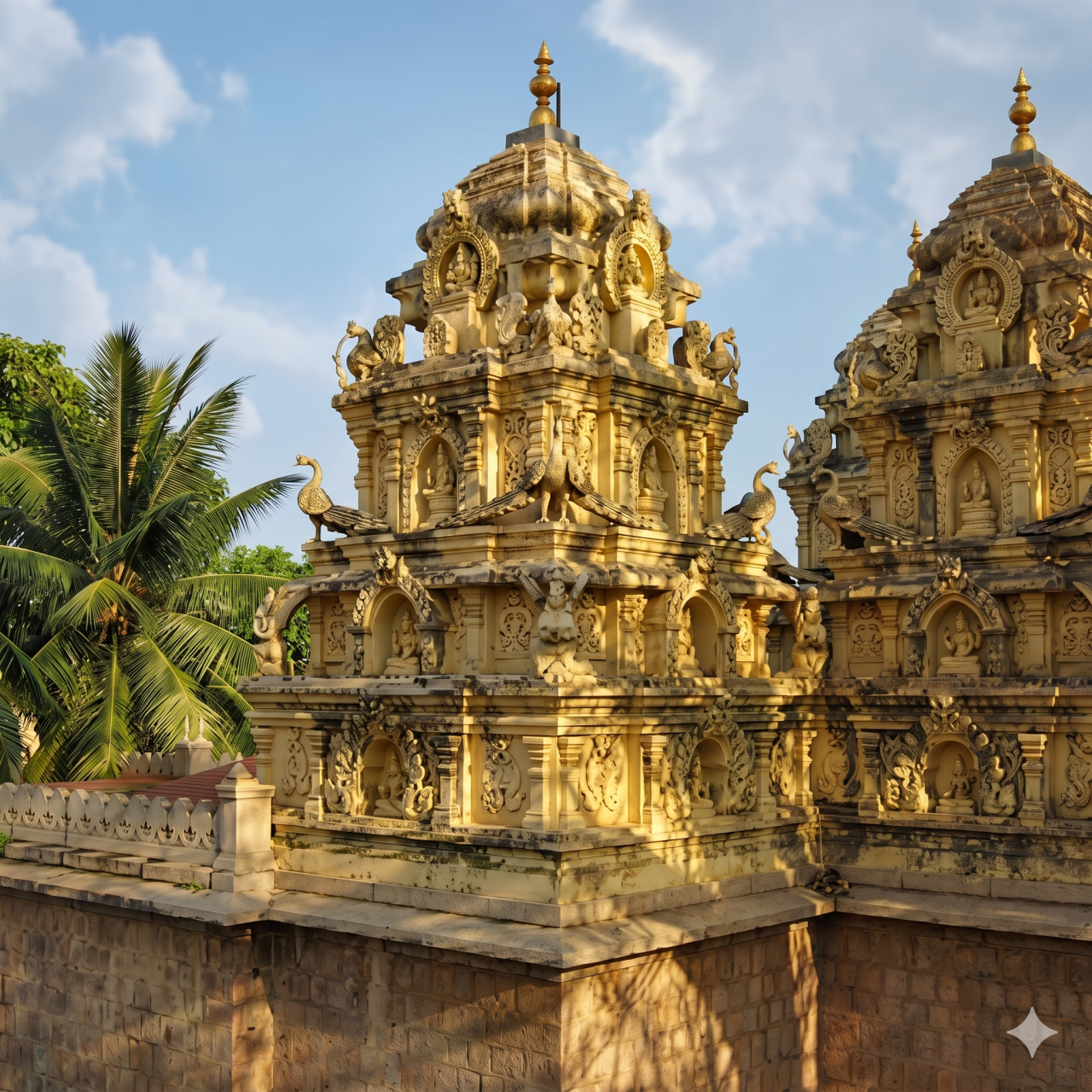
Sri Gayathri Devi Temple is a Hindu temple located in the Gayathri Puram area of Mysuru, Karnataka, India. It is dedicated to Goddess Gayathri, revered as the embodiment of wisdom and the consort of Lord Brahma. The temple is a local spiritual landmark known for its serene environment and traditional South Indian architecture.